Fewer than 300,000 tourists visit Bhutan in an entire year. That’s less than the crowd at a single sold-out football stadium — and yet this Himalayan kingdom packs more transformative experiences per square mile than almost anywhere on Earth. If you’re planning a trip, the things to do in Bhutan will surprise you, challenge you, and quietly rewire the way you think about travel.
This is not your average “top ten list.” This guide covers the full range of what to do in Bhutan — the iconic hikes, the sacred dzongs, the thunderous festivals, the quiet valleys, and the off-the-radar moments that most visitors never find. Whether you have five days or three weeks, what to see in Bhutan is always more than you expect, and every experience here connects to something deeper than sightseeing.
Table of Contents
Quick Facts: Bhutan at a Glance
| Detail | Information |
|---|---|
| Capital | Thimphu |
| Main entry airport | Paro International Airport |
| Currency | Bhutanese Ngultrum (BTN), pegged to Indian Rupee |
| Official language | Dzongkha |
| Sustainable Development Fee (SDF) | USD $100 per person, per night (valid until 2027) |
| Visa fee | USD $40 per person |
| Best time to visit | March–May and September–November |
| National sport | Archery |
| Tourism philosophy | High Value, Low Volume |
1. Trek to Tiger’s Nest Monastery — The Defining Things to Do in Bhutan
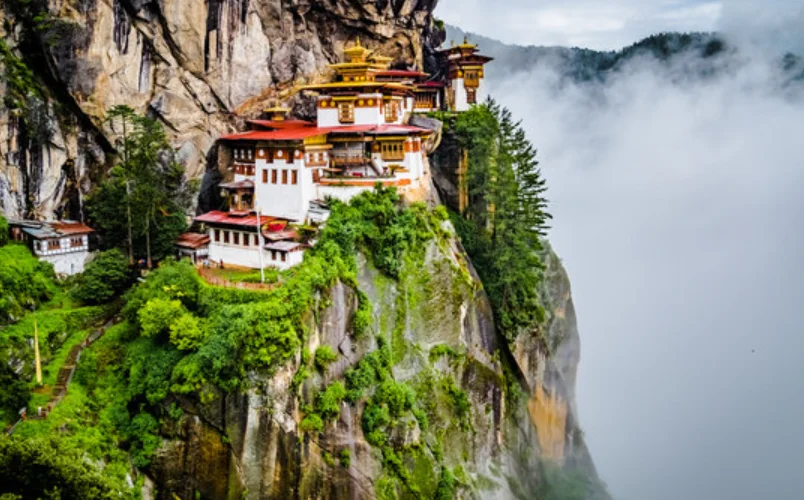
No conversation about things to do in Bhutan begins anywhere other than Taktsang Palphug Monastery, known the world over as Tiger’s Nest. Perched 900 metres above the floor of the Paro Valley, at an altitude of roughly 3,120 metres, this sacred complex clings to a near-vertical granite cliff like something from a dream. It is one of the most extraordinary religious sites in Asia and arguably the most iconic of all the things to visit in Bhutan.
The hike takes between two and four hours one way, depending on your pace, and gains around 600 metres in elevation. The trail winds through ancient blue pine and rhododendron forest, past fluttering prayer flags and a teahouse at the halfway point where yak butter tea restores tired legs. Then, at a dramatic viewpoint, Tiger’s Nest suddenly appears across the gorge — an impossible collection of whitewashed buildings with golden roofs, suspended in thin air.
What to Know Before You Go
Entry to the monastery requires changing into appropriate attire at the gate — no shorts, bare shoulders, or hats inside. Photography is not permitted within the inner sanctums, but the approach trail offers extraordinary views for your camera. Start before 8:00 AM to beat the midday heat and the larger tour groups. The monastery is typically open from 8:00 AM to 1:00 PM and 2:00 PM to 5:00 PM daily.
Why It Belongs at the Top of What to Do in Bhutan
According to ancient tradition, the great tantric master Guru Rinpoche flew to this cliffside on the back of a tigress in the 8th century, meditating in a cave for three months before emerging to teach Buddhism to the local people. That cave still exists within the monastery complex. Standing there, breathing the thin mountain air, it is impossible not to feel the weight of more than a thousand years of devotion. This is what to see in Bhutan at its most powerful.
2. Explore the Majestic Dzongs — Fortress-Monasteries That Define Bhutan
Bhutan’s dzongs are unlike anything else in the world. These massive, fortress-like structures served simultaneously as administrative centres, military strongholds, and Buddhist monasteries. Today, they remain active seats of both religious and civic life. Understanding the dzongs is central to understanding what to do in Bhutan beyond the surface.
Punakha Dzong
Set at the confluence of the Pho Chu (Father River) and Mo Chu (Mother River), Punakha Dzong is widely regarded as the most beautiful dzong in Bhutan. Surrounded by lilac-coloured jacaranda trees in spring and framed by snow-capped peaks year-round, it dates to 1637 and houses sacred religious relics including the remains of Bhutan’s spiritual founder, Zhabdrung Ngawang Namgyal. It is a three-hour drive east from Thimphu and among the most essential things to visit in Bhutan.
Tashichho Dzong, Thimphu
This gleaming white dzong at the northern edge of Thimphu serves as the secretariat of the Royal Government and the seat of the Central Monastic Body. It was originally built in 1641 and comprehensively renovated in the 1960s under the fourth king. The dzong is open to visitors in the late afternoon and on weekends, and watching monks file through its courtyards in crimson robes offers a rare window into Bhutanese monastic life.
Trongsa Dzong
Perched dramatically above the Mangde Chu gorge in central Bhutan, Trongsa Dzong was historically the seat of power from which all of Bhutan was governed. Every king of Bhutan served as the Penlop (Governor) of Trongsa before ascending the throne — a tradition that continues to this day. The views from the dzong’s ramparts over the plunging gorge below are among the most dramatic of all the things to see in Bhutan.

3. Attend a Tsechu Festival — The Most Unforgettable Cultural Experience
If your trip coincides with a Tsechu festival, rearrange everything to be there. Tsechu are annual religious festivals held throughout Bhutan in honour of Guru Rinpoche, and they represent the living heart of Bhutanese culture. Monks and laypeople in elaborate silk costumes perform the Cham — sacred masked dances that recount episodes from Buddhist history and mythology. The colour, the drumming, the incense, and the sheer devotional energy make attending a Tsechu among the most arresting things to do in Bhutan.
The Paro Tshechu, held in spring (dates shift annually with the lunar calendar), is the largest and most spectacular. The Thimphu Tshechu in autumn draws enormous crowds from across the country. In Bumthang, the Jambay Lhakhang Drup festival in October or November includes rare fire ceremonies performed under starlight.
Practical Tips for Festival Visits
Book accommodation months in advance — towns fill up completely during major Tsechu. Arrive at the festival grounds early, as the best viewing spots for the dances go quickly. Dress respectfully: traditional Bhutanese dress (Gho for men, Kira for women) is welcomed and appreciated, though not required of visitors. Local guides from Bhutan Cultural Tours can brief you on the symbolism of each dance, transforming a visually stunning spectacle into something deeply meaningful.

4. Trek Through Bhutan’s Mountain Landscapes
For adventurers, the trekking routes of Bhutan are among the great things to do in Bhutan for anyone who wants to earn their views the hard way. The terrain ranges from accessible valley walks to some of the most challenging high-altitude crossings on Earth.
Druk Path Trek (5–6 Days)
The classic introduction to Bhutan trekking. The Druk Path connects Paro to Thimphu through high-altitude forests and past pristine mountain lakes, including the sacred Jimilangtsho and Simkotra lakes. Maximum elevation reaches around 4,200 metres. The trail passes ruined dzongs and offers jaw-dropping views of the high Himalayan peaks including Jhomolhari and Jichu Drake.
Snowman Trek (25+ Days)
For the genuinely serious mountaineer, the Snowman Trek crosses 11 high passes, several above 5,000 metres, through some of the most remote and rarely visited terrain on the planet. It is considered one of the hardest treks in the world and is only completed successfully by a small fraction of those who attempt it each year. For those who finish it, this is the ultimate answer to the question of what to do in Bhutan.
Bumdrak Trek (2–3 Days)
A shorter but spectacular option above the Paro Valley, the Bumdrak Trek leads to a remote campsite at around 3,800 metres with extraordinary panoramic views of the Paro Valley below and the Himalayan chain above. This underrated gem belongs on every list of things to see in Bhutan for active travellers.

5. Discover Thimphu — A Capital Unlike Any Other
Thimphu is the only capital city in the world with no traffic lights — a fact that hints at the gentle, unhurried nature of Bhutanese urban life. As the most densely populated of all the things to do in Bhutan, the capital rewards slow, curious exploration.
Great Buddha Dordenma
This 51-metre golden Buddha statue presides over the southern valley from a hilltop above Kuenselphodrang Nature Park. Cast in bronze and finished in gold, it enshrines more than 100,000 smaller Buddha statues inside its body. The view from the statue’s platform over Thimphu Valley is among the finest in the country and one of the most striking things to visit in Bhutan without any strenuous effort.
Thimphu Weekend Market (Centenary Farmers Market)
Every Friday, Saturday, and Sunday, the Centenary Farmers Market on the banks of the Wang Chu River fills with farmers, cheese sellers, dried chilli vendors, and weavers from across the country. This is the most authentic introduction to everyday Bhutanese life available to any visitor. Wander the stalls, taste local snacks, and watch the unhurried rhythms of a society that still measures wealth differently from the rest of the world.
The National Museum of Bhutan
Housed in the old Ta Dzong watchtower above Paro (rather than Thimphu), this museum presents Bhutan’s history through rare thangka paintings, ancient weaponry, traditional costumes, and natural history exhibits. For anyone wondering what to see in Bhutan beyond its temples, this museum provides essential historical context.

6. Experience Phobjikha Valley and the Black-Necked Cranes
Every October and November, the broad glacial valley of Phobjikha in central Bhutan fills with the calls of black-necked cranes migrating south from the Tibetan plateau. These graceful, endangered birds winter here in the company of local farming communities who regard them as sacred — the valley is said to be protected by the crane’s annual presence. Watching hundreds of cranes descend at dusk over the golden fields is one of the most quietly extraordinary things to see in Bhutan.
The annual Black-Necked Crane Festival, held on November 11th each year at the Gangtey Monastery above the valley, celebrates the birds’ arrival with traditional dances, mask performances, and local culture. The monastery itself — Gangteng Goemba — is one of the oldest Nyingmapa monasteries in Bhutan and one of the most atmospheric things to visit in Bhutan in the autumn months.
7. Immerse Yourself in Bumthang — The Spiritual Heart of Bhutan
If Paro and Thimphu are Bhutan’s front door, Bumthang is its soul. This cluster of four high valleys in central Bhutan contains more sacred sites per square kilometre than almost anywhere in the country. Jakar, the main town, sits at around 2,580 metres and is cool, forested, and extraordinarily peaceful.
Jambay Lhakhang is one of Bhutan’s oldest temples, believed to have been built by the Tibetan emperor Songtsen Gampo in the 7th century as one of 108 temples constructed across the Himalayas in a single day to pin down a demoness. Kurjey Lhakhang, nearby, enshrines the body imprint of Guru Rinpoche himself in a sacred cave. Both are among the deepest of all the things to do in Bhutan for spiritually inclined travellers.
Bumthang is also the home of Red Panda Beer, Bhutan’s craft brewing tradition, and locally produced buckwheat pancakes with honey from valley beehives — two very good reasons why what to do in Bhutan here includes eating and drinking well.
8. Soak in a Traditional Hot Stone Bath
After days of trekking and temple-hopping, the traditional Bhutanese hot stone bath (dotsho) is among the most restorative of all the things to do in Bhutan. River stones are heated in fire until white-hot, then rolled into a wooden tub of water mixed with artemisia (wormwood) leaves. The minerals in the stones and the herbal infusion are said to ease joint pain, improve circulation, and treat a range of ailments. Most tour packages and farmhouse guesthouses in rural areas can arrange a dotsho experience. It is a uniquely Bhutanese form of wellness that has no real equivalent elsewhere.
9. Try Your Hand at Archery
Archery is Bhutan’s national sport, and it bears no resemblance to the Olympic version. Traditional Bhutanese archery uses large composite bows to shoot at targets placed 140 metres apart — more than twice the Olympic distance. Village tournaments are festive, noisy, and filled with elaborate taunting rituals as opposing teams attempt to distract archers at the moment of release. Watching a match, or better yet participating in a beginner’s session, is among the most joyful and culturally specific things to do in Bhutan.
10. Drive Dochula Pass and Visit the 108 Chortens
At 3,100 metres above sea level, Dochula Pass on the road between Thimphu and Punakha is marked by 108 memorial chortens (stupas) built by the Royal Queen Mother in 2004. On clear mornings — best in October through December — the chortens stand against a backdrop of some of the highest peaks in Bhutan, including Gangkhar Puensum, the world’s highest unclimbed mountain at 7,570 metres. The combination of fluttering prayer flags, white stupas, and snow-capped peaks makes Dochula one of the most photographed of all the things to see in Bhutan, and rightly so.
Bhutan 2026 Activity Overview: Quick Comparison
| Activity | Difficulty | Best Season | Approx. Duration |
|---|---|---|---|
| Tiger’s Nest Trek | Moderate | Mar–May, Sep–Nov | Half day |
| Punakha Dzong visit | Easy | All year | 2–3 hours |
| Tsechu Festival | N/A | Varies by location | Full day |
| Druk Path Trek | Moderate–Hard | Mar–May, Sep–Nov | 5–6 days |
| Phobjikha Valley | Easy | Oct–Nov | Full day |
| Bumthang temples | Easy | All year | 1–2 days |
| Hot stone bath | N/A | All year | 2 hours |
| Dochula Pass | Easy | Oct–Feb | Half day |
| Archery experience | Easy | All year | 1–2 hours |
| Snowman Trek | Extreme | Sep–Oct | 25+ days |
Frequently Asked Questions About Things to Do in Bhutan
What are the most popular things to do in Bhutan for first-time visitors?
For first-time visitors, the essential things to do in Bhutan are hiking to Tiger’s Nest Monastery in Paro, exploring Punakha Dzong, sightseeing in Thimphu including the Great Buddha Dordenma and the Centenary Farmers Market, and driving through Dochula Pass. If your timing allows, attending a Tsechu festival is the single experience that most transforms a first visit into something unforgettable.
What is there to see in Bhutan beyond the monasteries?
Beyond temples and dzongs, what to see in Bhutan includes alpine trekking routes, wildlife sanctuaries home to snow leopards, red pandas, and the endangered black-necked crane, traditional archery tournaments, the wellness experience of a hot stone bath, local craft markets, and the extraordinary landscapes of valleys like Phobjikha and Haa. Bhutan’s biodiversity is as rich as its cultural heritage.
What is the best time of year to visit Bhutan?
The two best windows for things to do in Bhutan are March to May (spring, when rhododendrons bloom and festivals occur) and September to November (autumn, when skies are clear and mountain views are sharpest). Winter is cold but uncrowded, with excellent views. Monsoon season (June to August) brings lush greenery but also muddy trails and occasional road closures.
How much does it cost to visit Bhutan in 2026?
All international tourists (excluding citizens of India, Bangladesh, and the Maldives) pay a Sustainable Development Fee of USD $100 per person, per night — a rate in effect until 2027. Additionally, a visa Price USD $40 per person. Tour package costs (covering accommodation, meals, transport, and a licensed guide) typically range from USD $180 to USD $250 per person per night depending on group size and hotel category. A seven-night trip therefore typically runs between USD $1,540 and USD $2,450 in government fees and package costs alone, excluding international flights.
Do I need a guide for things to do in Bhutan?
Yes. Most activities and destinations in Bhutan require travel through a licensed tour operator with a certified guide accompanying you. Independent travel is permitted only in Paro and Thimphu. For all other regions, a licensed guide is mandatory. This is not merely a bureaucratic requirement — an expert Bhutanese guide dramatically enhances every experience, from understanding the symbolism of a Cham dance to finding the unmarked trail that leads to a viewpoint no guidebook mentions.
Is Bhutan safe for solo travelers?
Bhutan is one of the safest travel destinations in Asia. Crime affecting tourists is exceptionally rare, the population is small and hospitable, and the mandatory guide system means solo visitors are never truly alone. Solo travelers pay a modest supplement on tour packages due to single-room usage, but in terms of personal safety, Bhutan is among the most relaxed places on Earth to travel alone.
What cultural etiquette should I know before visiting Bhutan?
Dress modestly when entering dzongs or temples — long sleeves and trousers or skirts below the knee are required, with full coverage of shoulders and lower legs mandatory inside sacred spaces. Always walk clockwise around chortens and prayer wheels. Remove hats when entering religious buildings. Ask permission before photographing monks, festivals, or local people. Avoid pointing your feet toward altars or religious images. These are not burdensome restrictions — they are invitations to engage with Bhutanese culture on its own terms.
Insider Tips for Getting the Most from Things to Do in Bhutan
- Book festivals in advance. Accommodation in Paro and Thimphu sells out six months before major Tsechus. Planning with Bhutan Cultural Tours early means you secure the right timing for your visit.
- Acclimatise before trekking. Paro airport sits at 2,200 metres and Thimphu at 2,300 metres. Spend two nights at lower altitude before beginning any multi-day trek.
- Pack layers, not bulk. Temperatures swing dramatically between valley floors and mountain passes. Light moisture-wicking layers work better than heavy jackets on trekking days.
- Carry cash. ATMs exist in Thimphu and Paro but are limited outside major towns. Most tour packages cover accommodation and meals, but personal spending money in Bhutanese Ngultrum or Indian Rupees is essential.
- The SDF discount is temporary. The current rate of USD $100 per night represents a 50% reduction from the standard rate. It is valid until 2027. Visiting in 2026 means experiencing Bhutan at one of the most accessible price points in recent memory.
Conclusion: Bhutan Is Waiting — and It Won’t Wait Forever
The things to do in Bhutan are not easily replicated anywhere else on Earth. This is a country that has deliberately chosen to limit how many people may experience it in any given year — not out of exclusivity, but out of a deep conviction that some places are worth protecting. The prayer flags, the cliffside monasteries, the masked dancers, the crane-filled valleys, the mountain silences — these are not attractions. They are the living soul of a civilization that has made different choices than the rest of the world.
The things to do in Bhutan reward those who arrive prepared and open-hearted. Come expecting to be transformed, and Bhutan will deliver.
Ready to start planning? Bhutan Cultural Tours has been crafting expertly guided journeys through the Kingdom of the Thunder Dragon for discerning travellers. Our licensed guides, hand-picked routes, and deep local connections ensure your experience of what to do in Bhutan goes far beyond what any guidebook can offer. Book your dream trip with Bhutan Cultural Tours today — because Bhutan is not just a destination, it is a once-in-a-lifetime decision, and 2026 is the ideal year to make it.