
The moment your plane descends toward Paro valley, the majestic peaks of the eastern Himalayas come into view, and you feel the first spark of excitement about your Bhutan tours. But there’s one practical question that travelers often overlook until they land: What is the Bhutan currency, and how do you actually use it?
Table of Contents
Welcome to the world of the Bhutanese Ngultrum—a currency as unique and intentional as the country itself. Unlike most travel destinations, understanding Bhutan currency isn’t just about knowing the exchange rate. It’s about understanding how a small mountain kingdom pegged its money to stability, preserved its traditions through every banknote, and created a payment system that reflects the nation’s deepest values.
This guide takes you through everything you need to know about Bhutan currency before, during, and after your trip. You’ll learn the history behind the Ngultrum, real exchange rates, the best places to exchange money in Bhutan, and insider tips that will save you stress—and money—on your journey through the Land of the Thunder Dragon.
Quick Facts: Bhutan Currency at a Glance
| Fact | Details |
|---|---|
| Official Currency | Bhutanese Ngultrum (BTN) |
| Symbol | Nu. or Nu |
| Currency Code | BTN |
| Subdivisions | 100 Chhertum = 1 Ngultrum |
| Pegged To | Indian Rupee (1 BTN = 1 INR) |
| Issued By | Royal Monetary Authority of Bhutan |
| Introduced | 1974 |
| 1 USD ≈ | 85 Nu. (2026) |
| Main Banknote Types | Nu. 1, 5, 10, 20, 50, 100, 500, 1,000 |
| Accepted Outside Bhutan | Not accepted; Indian Rupee is the only convertible option |
What Is Bhutan Currency? The Ngultrum Explained
The Bhutanese Ngultrum (abbreviated BTN, symbol Nu.) has been the official currency of Bhutan since 1974. If you’re planning a Bhutan tour, this is the money you’ll use for everything from momos at a local dzong-side café to handwoven textiles at craft markets in Thimphu.
The word “Ngultrum” itself tells a story. It comes from two Dzongkha words: “ngul,” meaning “silver,” and “trum,” a Hindi loanword meaning “money.” This bilingual name reflects Bhutan’s centuries-old relationship with both its Himalayan heritage and its powerful neighbor, India.
The Bhutan currency exists in two forms: coins and banknotes. Coins are available in denominations of 5, 10, 20, and 50 Chhertum (the smaller subdivision), as well as 1 Ngultrum pieces. Banknotes come in denominations of 1, 5, 10, 20, 50, 100, 500, and 1,000 Ngultrum.
What makes Bhutan currency truly special is what you see on the notes themselves. Each Bhutan currency banknote features vibrant, detailed illustrations of the country’s most sacred and significant landmarks. The Nu. 1 depicts the national flower, the blue poppy. The Nu. 50 showcases Tashichho Dzong, the seat of Bhutan’s government and the office of the king. The Nu. 1,000 and Nu. 50 feature King Jigme Khesar Namgyel Wangchuck, the fifth king who ascended the throne in 2006. These aren’t just pretty designs—they’re a reflection of Bhutanese identity, spirituality, and national pride embedded in your Bhutan currency.
The History of Bhutan Currency: From Silver Coins to the Modern Ngultrum
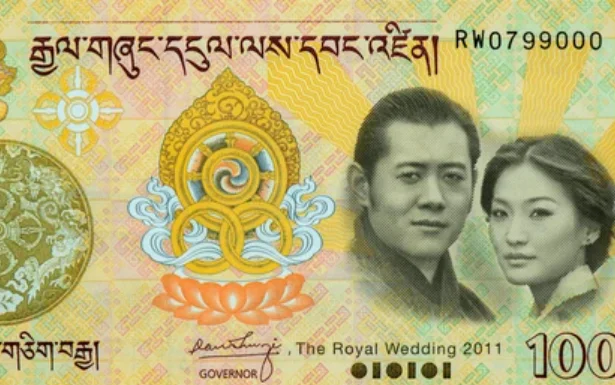
The story of Bhutan currency is a journey from barter to modernity, told through the eyes of five kings.
Before 1974, commerce in Bhutan operated on an ancient system of barter. Communities exchanged rice, butter, cheese, yak meat, wool, and hand-woven textiles. There was no need for standardized Bhutan currency—the mountains and valleys simply didn’t require it. Government officials were even paid in kind, not in cash.
Beginning in the late 18th century, Bhutan currency gradually emerged. Local chieftains began striking silver coins known as “Ma-trum” or “Chetrum” for trade with the plains. These weren’t issued by a central government; they were created by regional leaders. By the reign of the first king, Ugyen Wangchuck (1907–1926), the quality of these coins improved. Then, in 1928–29, during the second king’s reign, fine machine-struck silver and copper coins were introduced—the first glimpse of modern coinage.
It wasn’t until the 1950s that Bhutan began to truly monetize. The third king, Jigme Dorji Wangchuck, accelerated economic development, and the Indian Rupee was the primary currency in circulation. Then came the pivotal year: 1974.
During the reign of the fourth king, Jigme Singye Wangchuck, Bhutan currency underwent a complete transformation. On June 2, 1974—coinciding with the king’s coronation—the Ministry of Finance issued the first banknotes of the newly created Bhutanese Ngultrum. The Bhutan currency was standardized with a simple but powerful rule: 100 Chhertum = 1 Ngultrum.
But here’s the genius part: The Bhutan currency was pegged to the Indian Rupee at a 1:1 ratio, and it remains pegged to this day. This wasn’t a weakness—it was a strategic decision. By anchoring the Bhutan currency to India’s monetary system, the government eliminated currency volatility, facilitated seamless trade with its largest trading partner, and provided absolute stability for the economy.
In 1982, the Royal Monetary Authority of Bhutan (RMA) was established as the central bank. The following year, the RMA assumed full control over the issuance of all Bhutan currency banknotes and coins. And from that moment forward, every Bhutan currency note and coin issued has been a masterpiece of security, artistry, and national identity.
Bhutan Currency Exchange Rates: Understanding BTN to USD & Other Conversions
When you’re planning your Bhutan tour budget, you need to know the Bhutan currency exchange rate. As of June 2026, the approximate rates are:
- 1 USD = 85 Bhutanese Ngultrum (Nu.)
- 1 Bhutanese Ngultrum = 1 Indian Rupee (INR) — This is a fixed peg, not a floating rate
- 1 EUR ≈ 92 Nu.
- 1 GBP ≈ 108 Nu.
- 1 AUD ≈ 57 Nu.
The Bhutan currency exchange rate with the US Dollar fluctuates based on global market movements, so these figures are approximations. Before your Bhutan tour, check XE.com or OANDA for the most current Bhutan currency rates.
The critical thing to understand about Bhutan currency is that the Ngultrum is not accepted outside Bhutan. You cannot use Bhutan currency in India, Nepal, or any other country. This means when you’re converting money for your Bhutan tour, you need to be intentional about how much Bhutan currency you exchange. Fortunately, Bhutan Cultural Tours can help you plan your budget precisely so you’re not left with excess Bhutan currency at the end of your trip.
The Indian Rupee, however, tells a different story. Because the Bhutan currency is pegged to the INR at par, the Indian Rupee is widely accepted throughout Bhutan. If you’re traveling to Bhutan from India or prefer to carry Indian Rupees, you can use them directly in most establishments. Just note: Higher denomination Indian Rupee notes (₹500 and ₹2,000) are not accepted in Bhutan due to past counterfeiting concerns. Stick to ₹50, ₹100, and ₹500 notes.
Where to Exchange Money in Bhutan: Best Places & Insider Tips

You’ve arrived at Paro International Airport, and you need to exchange your foreign currency for Bhutan currency. Here’s where to go—and what to expect.
Paro International Airport (Your First Stop)
The foreign exchange counter at Paro Airport is open when international flights arrive. The Bhutan currency exchange rates here are competitive—the same as you’ll find at banks in the city. However, the process can be slow. Budget 20–30 minutes, especially during peak arrival times.
Insider Tip: Exchange just enough Bhutan currency to cover your first night and initial expenses at the airport. The real advantage of exchanging at the airport is convenience, not rate superiority. You’ll have better luck exchanging larger amounts at banks in Paro or Thimphu where the process is more streamlined.
Banks in Paro & Thimphu
Three banks dominate the financial landscape in Bhutan’s main towns:
- Bank of Bhutan (BoB) — The largest bank, with branches and ATMs throughout Paro and Thimphu. They exchange major currencies (USD, EUR, GBP, AUD, JPY, SGD, HKD, CAD, DKK, CHF) and offer competitive rates. Hours are typically 9 AM to 1 PM, Monday to Saturday.
- Bhutan National Bank (BNB) — Also offers currency exchange with comparable rates. Located in Changangkha, Thimphu.
- Druk PNB Bank — Specializes in USD to Bhutan currency conversion and often offers the best rates for American dollars. Located near Clock Tower Square in Thimphu.
Insider Tip: Major banks in Bhutan are only open from 9 AM to 1 PM, Monday to Saturday—and sometimes shorter hours on Saturday. This is crucial to know. If you’re arriving on a weekend or late in the day, the airport exchange counter might be your only option. Plan accordingly.
Authorized Money Changers in Thimphu
If banks are closed or you need faster service, licensed money changers operate in Thimphu:
- Bhutan Foreign Exchange (Jungshi Commercial Building, ground floor) — Open 9 AM to 5 PM, Monday to Saturday. Often offers slightly better rates than banks for USD.
Critical Rule: Only use authorized, licensed money changers. Avoid street changers or unauthorized individuals. The Bhutan currency is secure, and scams are rare, but using official channels protects you and ensures you’re receiving legitimate notes.
Hotels (Use as a Last Resort)
High-end hotels in Thimphu and Paro offer Bhutan currency exchange for guests, but rates are typically worse than banks. Use hotels only if you’re in an emergency or if banks are closed.
ATMs in Bhutan: What to Know Before You Withdraw
The Bank of Bhutan operates ATMs in major cities, including:
- Paro (3 locations: Airport, Branch Premises, Bondey Town)
- Thimphu (multiple locations)
- Punakha
- Other key towns
Withdrawal Limits: You can withdraw up to Nu. 10,000 per transaction. Maximum daily withdrawal depends on your card issuer.
Cards Accepted: Visa and MasterCard are widely accepted at BoB ATMs. American Express has limited support.
Insider Warning: ATMs in Bhutan are notoriously unpredictable. They frequently run out of cash, experience technical glitches, or go offline due to power issues. Do not rely on ATMs as your primary source of Bhutan currency. Get the cash you need when you arrive in Paro or exchange money early in Thimphu before heading to remote areas.
Bhutan Currency on Your Tour: Cash vs. Cards & Payment Methods

Now that you understand Bhutan currency, here’s how you’ll actually use it during your Bhutan tour.
Why Cash Is King in Bhutan
Bhutan is still largely a cash-based economy, especially outside Thimphu and Paro. Local markets, small restaurants, craft shops, and rural villages operate exclusively on cash. When you’re hiking to Tiger’s Nest Monastery or shopping for hand-woven textiles at a weaving cooperative in Bumthang, Bhutan currency in your pocket is your only option.
Credit Cards: Growing But Still Limited
Credit card acceptance is increasing in Bhutan, but the infrastructure is far from reliable. Here’s where you can use them:
- High-end hotels (4-star and above in Thimphu and Paro)
- Tourist restaurants catering to international visitors
- Government-approved handicraft emporiums in Thimphu
- Visa and Mastercard are widely accepted; American Express has minimal support
Important: A 3–5% surcharge typically applies to card payments. Payment terminals occasionally fail, leaving you unable to pay by card when you need it most.
Your Smart Money Strategy for a Bhutan Tour
- Exchange before arrival if possible (at your home bank or currency exchange office).
- Bring USD or EUR in cash — these are the most widely accepted foreign currencies for Bhutan currency exchange.
- Exchange 60–70% at Paro Airport to cover your tour costs.
- Exchange the remainder in Thimphu at a bank (better rates, larger amounts).
- Keep 1–2 credit cards as backup for emergencies or high-end establishments.
- Carry a mix of small and medium Bhutan currency denominations — vendors often can’t make change for large notes.
How Much Bhutan Currency Should You Carry Daily? Budget Breakdown
The amount of Bhutan currency you need depends on your travel style and what’s included in your Bhutan tour package.
Here’s the reality: Bhutan Cultural Tours includes accommodation, meals, internal flights, and entrance fees in most tour packages. This means you’re only spending Bhutan currency on personal extras.
Daily Budget Breakdown (Per Person)
| Travel Style | Daily Budget (Nu.) | Daily Budget (USD Approx.) |
|---|---|---|
| Budget Traveler | 1,500–2,000 Nu. | $18–$24 |
| Mid-Range Traveler | 2,500–4,000 Nu. | $30–$47 |
| Luxury Traveler | 5,000+ Nu. | $60+ |
This money covers:
- Drinks and snacks
- Souvenirs and handicrafts
- Tips for guides and drivers (not mandatory, but appreciated)
- Incidental expenses
- Optional activities not in your tour package
Pro Tip: If you’re on a Bhutan tour, ask Bhutan Cultural Tours to estimate your daily spending before you arrive. This eliminates the guesswork and ensures you exchange exactly what you need.
Insider Tips for Using Bhutan Currency Like a Local
Tip 1: Larger Bills Are Harder to Use in Rural Areas
If you exchange larger denominations of Bhutan currency (Nu. 500 or Nu. 1,000), you’ll struggle in remote villages or small shops. Always keep a mix of Nu. 10, 20, and 50 notes. Your tour guide can help you exchange larger bills in cities before heading to remote areas.
Tip 2: The Indian Rupee–Bhutan Currency Relationship Is Your Friend
Because the Bhutan currency is pegged 1:1 to the Indian Rupee, you can use Indian Rupees in most places. However, always carry some Bhutan currency because not all vendors accept INR, and you’ll get better service and respect from locals when you use the local currency.
Tip 3: Banknotes Are Works of Art—Don’t Damage Them
Bhutan currency banknotes are printed on high-quality polymer for durability and security. However, “soiled” or damaged notes cannot be used. Treat your Bhutan currency with respect (as Bhutanese people do). Never crumple, fold, or damage notes.
Tip 4: Unused Bhutan Currency Can Be Exchanged on Departure
Before you leave Paro Airport, you can convert any leftover Bhutan currency back to your home currency at the foreign exchange desk. Keep your exchange receipts to make this process smooth.
Tip 5: Tipping With Bhutan Currency
Tipping is not mandatory in Bhutan, but it’s a meaningful gesture. A standard tip is Nu. 100–500 for guides and drivers, depending on the length and quality of service. Always tip in Bhutan currency—it shows respect for the local economy.
Cultural Significance: Why Bhutan Currency Tells a Story
Every Bhutan currency banknote is a masterpiece of cultural storytelling. This isn’t by accident—it’s by design.
The Royal Monetary Authority of Bhutan deliberately chose to feature national symbols, landmarks, and historical figures on each denomination. The Nu. 100 features the fourth king, Jigme Singye Wangchuck, who introduced the concept of Gross National Happiness (GNH)—a philosophy that measures progress not by GDP, but by citizen wellbeing, environmental conservation, and cultural preservation.
When you hold Bhutan currency in your hands, you’re holding more than money. You’re holding the values of a nation that chose happiness over wealth, sustainability over growth, and tradition over modernization. This is why understanding and respecting Bhutan currency is part of understanding Bhutan itself.
Frequently Asked Questions About Bhutan Currency
Q: Can I use Bhutan currency outside of Bhutan?
A: No. Bhutan currency is not accepted outside the country. You cannot use Ngultrum in India, Nepal, or anywhere else. Only Indian Rupees can be converted back to foreign currency.
Q: Is it safe to carry large amounts of Bhutan currency?
A: Yes. Bhutan is one of the safest countries in the world. Crime is extremely rare, and money-related scams are virtually non-existent. You can safely carry the Bhutan currency you need for your trip.
Q: What should I do if I have leftover Bhutan currency?
A: Convert it back at Paro Airport’s foreign exchange desk before departure. Keep your original exchange receipt to make the process smooth. Better yet, plan your exchange carefully so you don’t have excess Bhutan currency at the end.
Q: Can I exchange Bhutan currency at my bank back home?
A: Most banks do not exchange Bhutan currency because the Ngultrum is not widely traded internationally. Exchange any leftover Bhutan currency at Paro Airport before you leave.
Q: Is the Indian Rupee really accepted everywhere in Bhutan?
A: The Indian Rupee is widely accepted, but not universally. Some smaller vendors prefer Bhutan currency. Always carry both for the smoothest experience during your Bhutan tour.
Q: What’s the best exchange rate I can get for Bhutan currency?
A: Bank rates in Paro and Thimphu are competitive and consistent. Airport rates are the same as bank rates. Authorized money changers sometimes offer slightly better rates for larger USD amounts. Avoid hotel exchanges—rates are typically worse.
Q: Can I withdraw Bhutan currency from ATMs using my international card?
A: Yes, you can withdraw at Bank of Bhutan ATMs using Visa or MasterCard, up to Nu. 10,000 per transaction. However, ATMs are unreliable in Bhutan. Use them as a backup, not your primary source.
Q: Do I need to declare Bhutan currency when entering or leaving the country?
A: No. There are no restrictions on bringing Bhutan currency in or out, though you won’t find any practical use for it outside Bhutan.
Planning Your Bhutan Tour With Confidence: Money Matters Simplified
Understanding Bhutan currency is one of the final pieces of your pre-trip puzzle. But the truth is, once you’re on your Bhutan tour, money becomes secondary. What matters is the experience—the prayer flags fluttering in the mountain wind, the warmth of your guide’s welcome, the taste of authentic Bhutanese cuisine, the spiritual energy of ancient monasteries.
This is where Bhutan Cultural Tours makes all the difference. When you book your Bhutan tour with us, we handle the complexity so you don’t have to. Our team provides detailed pre-trip guidance on Bhutan currency, exchange rates, and budgeting. We coordinate with your guide to ensure you have the Bhutan currency you need when you need it. And we support you throughout your journey—because your peace of mind is as important as the memories you’ll create.
Whether you’re exchanging your first USD for Bhutan currency at Paro Airport or haggling in Bhutanese over the price of a handwoven textile at a village market, you’re participating in an economy, a culture, and a way of life that values intention, respect, and sustainability.
Your Bhutan tour awaits. And now, you’re ready to navigate it with confidence.
Start planning your Bhutan tour today with Bhutan Cultural Tours. Our expert team will guide you through every detail—from currency strategy to customized itineraries that match your dreams. Book with us and experience Bhutan the way it was meant to be experienced: fully present, deeply connected, and completely supported.


