Step off the plane in Paro and you’ll notice it before you notice anything else — nobody is in a hurry. That unhurried rhythm is the first real lesson in Bhutan culture, a living tradition built on Buddhist values, colorful festivals, and a national philosophy that puts happiness above GDP. Unlike most of Asia, Bhutan closed its doors to outsiders until the 1970s, which means what you’ll experience today isn’t a museum recreation — it’s the real, breathing thing. In this guide, we’ll walk through everything that defines Bhutan culture: its people, its dress, its festivals, and the etiquette every visitor should know before landing.
Table of Contents
Bhutan Culture At a Glance
- State religion: Vajrayana Buddhism (practiced by roughly 75% of the population)
- National language: Dzongkha, alongside 19 other dialects
- National dress: Gho (men) and Kira (women)
- National philosophy: Gross National Happiness, prioritizing wellbeing over commercial growth
- Signature festivals: Paro Tshechu, Thimphu Tshechu, Black-Necked Crane Festival
- National dish: Ema Datshi (chili and cheese stew)
- National sport: Archery (Dha)
The Foundations of Bhutan Culture
Bhutan culture didn’t evolve the way most national identities do, through trade routes and colonization. It grew in near-total isolation behind the Himalayas, protected on purpose by a government determined to preserve its heritage. Buddhism arrived in the 8th century with Guru Rinpoche, and by the 1600s the Drukpa lama Zhabdrung Ngawang Namgyal had unified the valleys under one government and one faith. That single moment shaped everything that followed in Bhutanese life.
Every dzong (fortress-monastery) you’ll visit on a tour traces back to this era. These aren’t relics — dzongs still function as the administrative and religious heart of each district today, which is part of what makes the culture of Bhutan feel so continuous rather than performed for tourists.
Why Isolation Preserved the Culture of Bhutan
Bhutan only opened to foreign visitors in limited numbers in the last decades of the 20th century. That late opening is precisely why traditional practices, dress, and festivals survived intact while neighboring regions modernized rapidly. Travelers often tell us this is the single biggest reason Bhutan culture feels different from anywhere else in Asia — it wasn’t diluted, it was protected.
Religion: The Heartbeat of Bhutanese Life
You cannot separate Bhutan culture from Vajrayana Buddhism — the country is the only nation on Earth where it’s the state religion. Prayer flags snap in the wind on nearly every ridge, monks chant before dawn in monasteries, and butter lamps burn continuously as offerings. Around 23% of the population practices Hinduism, and the King guarantees freedom of religion, but Buddhist philosophy still shapes daily decisions — from how houses are built to how disputes are settled.
Gross National Happiness
No conversation about Bhutan traditions is complete without Gross National Happiness (GNH), the philosophy that measures national progress through wellbeing, environmental balance, and cultural preservation instead of pure economic output. It’s not a slogan — it directly shapes tourism policy, land-use law, and even school curriculums.
Traditional Dress: Gho and Kira
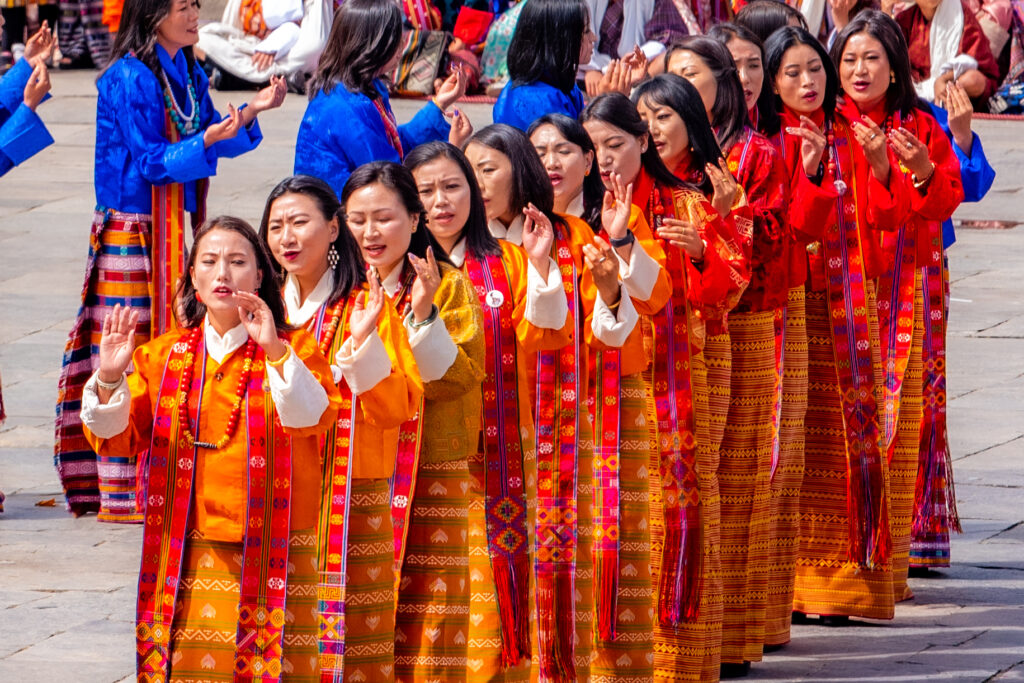
Nothing signals Bhutan culture faster than its national dress. Men wear the Gho, a knee-length robe belted at the waist with a kera, paired with a kabney (scarf) that indicates rank. Women wear the Kira, an ankle-length wrap dress fastened with silver brooches called koma, worn with a short jacket called a toego.
This isn’t costume for special occasions only — the dress code, formally called Driglam Namzha, is mandatory in schools, government offices, and formal ceremonies. It governs far more than clothing too; Driglam Namzha covers etiquette, how to speak to officials, and how to serve food at public gatherings.
Where You’ll See It Most
- Government buildings and monasteries (required)
- Tshechu festivals, where dress becomes a display of pride
- Everyday rural life, where older generations still wear it daily
- Weddings and religious ceremonies
Festivals: Where Bhutan Traditions Come Alive
If you want to see the culture of Bhutan in full color, time your trip around a Tshechu. These multi-day festivals, held in dzong courtyards across the country, feature masked dances called Cham performed by monks and laymen re-enacting stories from the life of Guru Rinpoche.
| Festival | When | Location | Highlight |
|---|---|---|---|
| Paro Tshechu | Spring (March–April) | Paro Dzong | Giant thongdrel unfurling |
| Thimphu Tshechu | Autumn (Sept–Oct) | Tashichho Dzong | Largest crowd, most elaborate masks |
| Black-Necked Crane Festival | November 11 | Phobjikha Valley | Conservation meets culture |
| Gangtey Tshechu | Oct 5–7 | Gangtey Monastery | Intimate, less touristed |
The final day of most Tshechus features the unveiling of a giant silk thongdrel — believed to wash away the sins of anyone who sees it. Watching this in person is, hands down, one of the most moving parts of experiencing Bhutan culture firsthand.
Food, Language, and Everyday Bhutanese Life
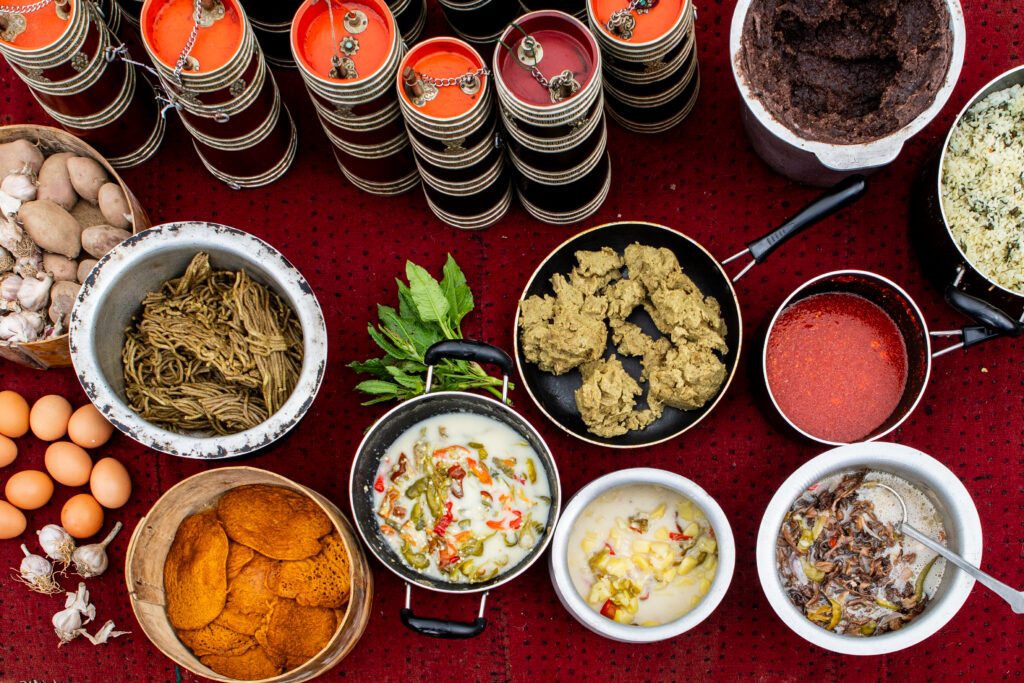
Bhutanese food centers on rice (especially red rice), chilies, and cheese — Ema Datshi, a chili-and-cheese stew, is the unofficial national dish. Meals traditionally arrive as small shared dishes eaten with the hands, though hotels catering to tourists typically serve Western-style with cutlery.
Dzongkha is the official Bhutan language, but Bhutan is home to nearly 19 dialects, a reflection of how isolated valleys developed independently for centuries. English is widely taught in schools, so most guides and younger Bhutanese speak it comfortably — you won’t need Dzongkha to get around, though learning “Kuzu Zangpo La” (hello) goes a long way.
Insider Tip
Ask your guide to arrange a meal in a local farmhouse rather than only hotel dining. It’s the fastest way to experience real Bhutanese hospitality and see traditions in Bhutan that never make it into brochures — like the custom of always refilling a guest’s cup before it’s empty.
Etiquette: What Every Visitor Should Know
Respecting Bhutan culture isn’t complicated, but a few customs matter deeply:
Inside Temples and Dzongs
- Remove shoes and hats before entering
- Walk clockwise around religious structures and prayer wheels
- Never point your feet toward a Buddhist statue or an elder
- Photography is often restricted inside assembly halls — always ask first
Everyday Manners
- Give and receive objects with your right hand, or both hands together
- Avoid pointing with your finger; motion with an open palm instead
- Dress modestly, especially near religious sites
- Avoid political commentary about the royal family
These small courtesies matter more in Bhutan than in most destinations, because Bhutanese culture treats visitors as guests in a genuinely sacred space, not just tourists passing through.

Arts and Crafts: The Thirteen Living Skills
Bhutan formally classifies its traditional arts into 13 categories known as Zorig Chusum — including weaving, painting, woodcarving, and bronze casting. These aren’t hobbyist crafts; they’re taught through formal institutions and passed down as functioning trades. Bhutanese textiles in particular have earned international recognition for their intricate hand-woven patterns, something collectors now specifically travel to Bhutan to purchase directly from weavers.

Planning a Trip Around Bhutan Culture
The best way to actually experience the culture of Bhutan — rather than glimpse it from a bus window — is to build your itinerary around it. That means timing your visit to a Tshechu, staying in villages instead of only cities, and traveling with guides who can translate the meaning behind what you’re seeing, not just the schedule.

At Bhutan Cultural Tours, our itineraries are built specifically around festivals, monastery visits, and homestays so you experience Bhutan traditions as they’re actually lived, not staged for cameras.
Frequently Asked Questions
What is Bhutan best known for culturally?
Bhutan is best known for being the only country where Vajrayana Buddhism is the state religion, for its national philosophy of Gross National Happiness, and for preserving its traditional dress, architecture, and festivals more completely than almost anywhere else in Asia.
What is the traditional dress of Bhutan called?
Men wear the Gho, a knee-length robe tied with a belt called a kera. Women wear the Kira, a full-length wrap dress secured with silver brooches. Both are still required in schools, government offices, and formal occasions as part of everyday Bhutan culture.
What is the best time to see Bhutan festivals?
Spring (March–May) and autumn (September–November) are peak Tshechu season, with the Paro Tshechu in spring and the Thimphu Tshechu in autumn being the two largest and most accessible festivals for travelers.
Do Bhutanese people speak English?
Yes. English is taught in schools alongside Dzongkha and is widely spoken, especially by guides and younger generations, making it easy for international travelers to get around without a language barrier.
Is it respectful for tourists to wear Bhutanese national dress?
Yes, when done thoughtfully. Many tour operators, including Bhutan Cultural Tours, offer guests the chance to wear a Kira or Gho during cultural experiences, guided respectfully by local hosts so it feels like participation rather than costume.
What religion is practiced in Bhutan?
The vast majority of Bhutanese practice Vajrayana Buddhism, a branch of Mahayana Buddhism, while roughly 23% practice Hinduism. The King constitutionally guarantees freedom of religion for all citizens.
Final Thoughts: Experiencing Bhutan Culture for Yourself
Bhutan culture isn’t something you observe from behind glass — it’s something you’re invited to step into, one dzong, one festival, and one shared meal at a time. From the Gho and Kira to the thunder of a Tshechu drum circle, every tradition here carries centuries of meaning still very much alive today. Understanding this before you go doesn’t just make you a more respectful traveler — it makes the entire trip more meaningful.
If you’re ready to see Bhutan culture up close instead of just reading about it, Bhutan Cultural Tours can build your itinerary around the festivals, monasteries, and villages that show you the real Bhutan. Start planning your trip today — this small Himalayan kingdom is waiting, and it’s every bit as extraordinary as it sounds.


