The first time a shopkeeper in Thimphu answered my clumsy “Kuzu zangpo la” with a wide grin, I understood something guidebooks rarely mention: the Bhutan language is less a barrier and more an invitation. Dzongkha, the official Bhutan language, sounds intimidating in text but rolls off the tongue faster than most travelers expect.
In this guide, you will learn what it actually is, where it comes from, how to greet people the right way, and why even ten memorized words change the entire tone of your trip. This is not a dry linguistics lesson. It is the same practical breakdown we share with every traveler booking a Bhutan tour with us, built from years of watching first-timers light up the moment their pronunciation lands.
Table of Contents
Quick Facts About the Bhutan Language
- Official name: Dzongkha, meaning “language of the fortress”
- Status: National and official language of Bhutan since 1971
- Speakers: Roughly 170,000 native speakers, with over 600,000 total speakers across the country
- Script: Written in Tibetan script, formally called Chhokey
- Family: A Tibeto-Burman language, closely related to but not fully intelligible with Standard Tibetan
- Second languages: English is the medium of instruction in Bhutanese schools, and Hindi is widely understood
- Other tongues: Around 19 to 24 additional languages and dialects are spoken across different valleys
What Is the Bhutan Language Actually Called?
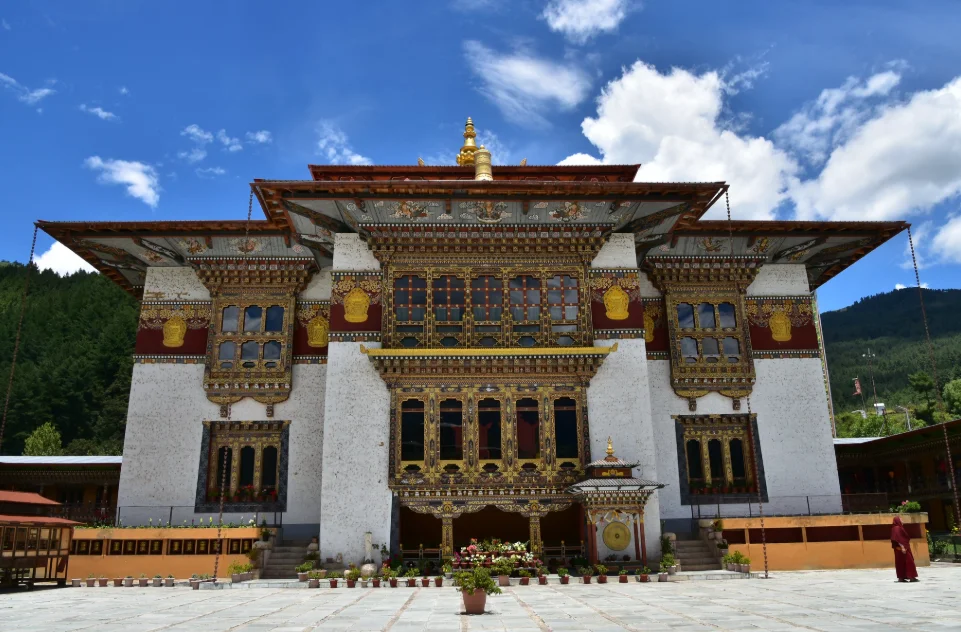
Most travelers arrive assuming there is one single “Bhutanese language,” and technically that instinct is correct, even though the reality underneath is richer. The Bhutan language spoken officially across government offices, schools, and dzongs (fortress-monasteries) is Dzongkha. The word itself breaks down beautifully: “dzong” means fortress, and “kha” means language, so Dzongkha literally translates to the language spoken within the fortress walls.
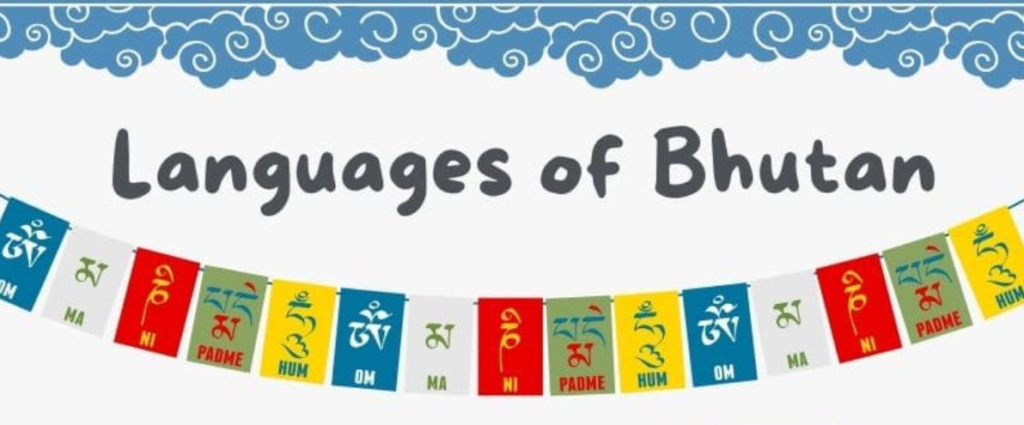
Dzongkha uses the same Tibetan script you will see on prayer flags and monastery murals throughout the kingdom. If you have ever looked at those flowing, elegant characters and wondered what they say, there is a fair chance you were reading a form of the Bhutan language rather than Tibetan itself, since the two share an alphabet but diverge meaningfully in pronunciation and everyday vocabulary.
Why Dzongkha Became the National Language
Before 1971, Bhutan relied heavily on Chöke, or Classical Tibetan, as the language of religious and administrative life. When the country moved to strengthen a distinct national identity, Dzongkha was formally declared the national Bhutan language, and its study became mandatory in every school. That single decision shaped how an entire generation of Bhutanese citizens communicates today, whether they grew up speaking Dzongkha at home or picked it up as a second language in the classroom.

Other Languages Spoken Across Bhutan
Here is something that surprises almost every traveler: the Bhutan language landscape is far more diverse than a single national tongue suggests. Bhutan is home to roughly two dozen languages and dialects, nearly all belonging to the Tibeto-Burman family.
- Tshangla (Sharchopkha): Spoken by an estimated 130,000 to 170,000 people in eastern Bhutan, making it one of the most widely used mother tongues in the country
- Bumthangkha: The dominant language of central Bhutan’s Bumthang valley, spoken by roughly 30,000 people
- Lhotshamkha (Nepali): Common in southern Bhutan among communities of Nepali descent
- Laya and Brokpa: Spoken by small yak-herding communities in the remote highlands
If your itinerary takes you beyond Paro and Thimphu into central or eastern Bhutan, you will likely hear one of these regional tongues before you hear Dzongkha at all. This is exactly the kind of cultural texture our guides at Bhutan Cultural Tours love pointing out, because it turns a scenic drive into a genuine lesson in how the Bhutan language actually functions on the ground.
How to Say Hello in the Bhutan Language
This is the section every traveler bookmarks, so here is a phrase table you can screenshot before you land.
| English | Dzongkha (Bhutanese) | How to Say It |
|---|---|---|
| Hello / Greetings | Kuzu zangpo la | Koo-zoo zahng-poh la |
| Thank you | Kadrin chhe la | Kah-drin chay la |
| How are you? | Ga dey bay zhu yoe ga? | Gah-day bay zhoo yoh gah |
| I am fine | Nga leg shom bay rang yoe | Ngah leg-shom bay rahng yoh |
| Goodbye | Log jay gay | Lock jay gay |
| Yes | Ing | Ing |
| No | Meh | Meh |
| Good luck | Tashi delek | Tah-shee deh-lek |
| Delicious | Zhim bay | Zhim bay |
Notice the small syllable “la” tacked onto so many phrases. In the Bhutan language, adding “la” at the end of a sentence signals respect, and Bhutanese speakers use it constantly, even when speaking English to elders. Say “yes-la” instead of a flat “yes” to an older shopkeeper or guide, and you will see the difference in how warmly they respond.
The Etiquette Behind the Words
Learning the words is only half the picture. Bhutanese greetings traditionally involve a slight bow with open palms rather than a handshake, though handshakes are now accepted, especially in cities. When receiving or giving anything, from a cup of butter tea to a souvenir, use both hands or your right hand only. Never use your left hand alone, since it carries a mildly disrespectful connotation throughout the region.
Why Learning a Few Words in the Bhutan Language Matters
Some travelers assume this effort is unnecessary since English is so widely spoken. English genuinely is the medium of classroom instruction across Bhutan, and most guides, hotel staff, and shopkeepers in tourist areas speak it comfortably. Yet the Bhutan language still carries something English cannot replicate: it signals that you see Bhutan as more than a scenic backdrop.
A trekking guide in Paro once told me that tourists who attempt even three words of Dzongkha get treated differently, not because locals expect fluency, but because the effort proves genuine curiosity about Bhutanese culture rather than a checklist mentality. That single observation shapes how we brief every guest before their trip. It costs nothing to learn “Kuzu zangpo la,” yet the goodwill it buys during a two-week journey through the Himalayas is enormous.
Bhutan also measures success differently than most nations, tracking Gross National Happiness alongside economic growth, and language plays a quiet role in that philosophy. The Bhutan language is treated as a living connector between generations, not just a bureaucratic requirement, which is part of why the government protects it so carefully even as English usage grows among younger Bhutanese.

Insider Tips for Practicing the Bhutan Language on Your Trip
Start Small and Specific
Do not try to memorize twenty phrases before your flight. Master three: hello, thank you, and goodbye. Once those feel natural, your guide will happily teach you more during long drives between Thimphu, Punakha, and Paro, which are exactly the kind of quiet moments a private Bhutan tour makes room for.
Listen Before You Speak
Dzongkha is a tonal language with high and low registers, meaning the same syllable can carry different meanings depending on pitch. Rather than reading phrases cold, listen to your guide say them first and mimic the rhythm rather than the spelling.
Use “La” Generously
When in doubt, add “la” to the end of anything you say to someone older or in a position of respect. It is the single easiest way to sound polite in the Bhutan language without memorizing complex grammar.
Carry a Phrase Card
Write your top ten phrases on a small card or save them as a phone note. Pull it out at markets, temples, and village homestays. Bhutanese hosts consistently light up when a guest makes a visible effort, even a fumbling one.
Numbers, Food Words, and Other Handy Bhutanese Vocabulary
Once greetings feel comfortable, a handful of numbers and food-related words round out your everyday Bhutan language toolkit nicely. Counting to five in Dzongkha is chig, nyi, sum, zhi, nga, and most travelers pick this up within a single taxi ride once a friendly driver starts quizzing them for fun.
Food vocabulary tends to matter even more, since meals are such a central part of any Bhutan itinerary. “Ema datshi,” the fiery chili and cheese dish considered the unofficial national plate, is not just a menu item; asking for it by name using correct Dzongkha pronunciation almost always earns an approving nod from kitchen staff. Other useful words include “chu” for water, “za” meaning to eat, and “zhim bay” for delicious, which you will want ready the moment your first plate of red rice and chili arrives.
Learning Resources Worth Trying Before You Fly
A few travelers ask whether Dzongkha is available on mainstream apps like Duolingo. It currently is not, though smaller platforms such as Mango Languages and uTalk offer structured Dzongkha lessons built specifically around travel vocabulary. Even fifteen minutes a day for a week before departure is enough to walk off the plane in Paro with real, usable phrases rather than a blank stare.
If self-study is not your style, do not worry. Every guide on a Bhutan Cultural Tours itinerary treats language coaching as part of the experience, not an afterthought, so you can absorb the Bhutan language naturally through conversation on long mountain drives instead of flashcards.

Frequently Asked Questions
What is the official Bhutan language?
The official Bhutan language is Dzongkha, declared the national language in 1971. It is written in Tibetan script and taught in every school across the country, though English remains the medium of instruction for most subjects.
How do you say hello in the Bhutan language?
You say “Kuzu zangpo la,” pronounced koo-zoo zahng-poh la. This greeting works in nearly every situation, from meeting your guide at the airport to greeting shopkeepers in Thimphu’s weekend market.
Is English widely spoken in Bhutan?
Yes. English has been the medium of school instruction in Bhutan for decades, so most people working in tourism, hospitality, and government speak it fluently. Learning a little of the Bhutan language still goes a long way with older generations and rural communities.
How many languages are spoken in Bhutan?
Bhutan is home to roughly two dozen languages and dialects, including Dzongkha, Tshangla, Bumthangkha, and Lhotshamkha, nearly all belonging to the Tibeto-Burman language family.
Is Dzongkha difficult to learn for travelers?
Basic greetings and phrases are quite approachable, even though Dzongkha grammar and its tonal pronunciation take longer to master. Most travelers comfortably pick up five to ten useful phrases within a day or two of arriving, especially with a guide’s help.
Can I get by in Bhutan without knowing any Dzongkha?
Absolutely, since English is spoken throughout the tourism industry. That said, even a few words of the Bhutan language noticeably deepen your interactions with locals and are genuinely appreciated everywhere you go.
What does “la” mean at the end of Bhutanese sentences?
“La” is a respect suffix added to the end of words and sentences in the Bhutan language, roughly similar to adding “sir” or “ma’am” in tone rather than literal meaning. Bhutanese speakers use it constantly, even when speaking English, and travelers who adopt the habit are noticeably well received.
Final Thoughts on the Bhutan Language
The Bhutan language is not a hurdle standing between you and a great trip; it is one of the most rewarding parts of the journey itself. Dzongkha connects you to centuries of history behind every dzong, monastery, and mountain village you will visit, and even a handful of phrases turn polite transactions into genuine human moments. Between the national language, its regional cousins like Tshangla and Bumthangkha, and the respectful little word “la” that ties it all together, Bhutan’s linguistic landscape mirrors the warmth of the country itself.
If this glimpse into the Bhutan language has you dreaming of hearing it spoken firsthand, Bhutan Cultural Tours can help turn that curiosity into a real itinerary. Our guides weave language, history, and culture into every day on the road, so you leave not just with photographs, but with a few words that stay with you long after the trip ends. Start planning your Bhutan journey today, and let us show you a side of the kingdom that goes far beyond the postcards.


