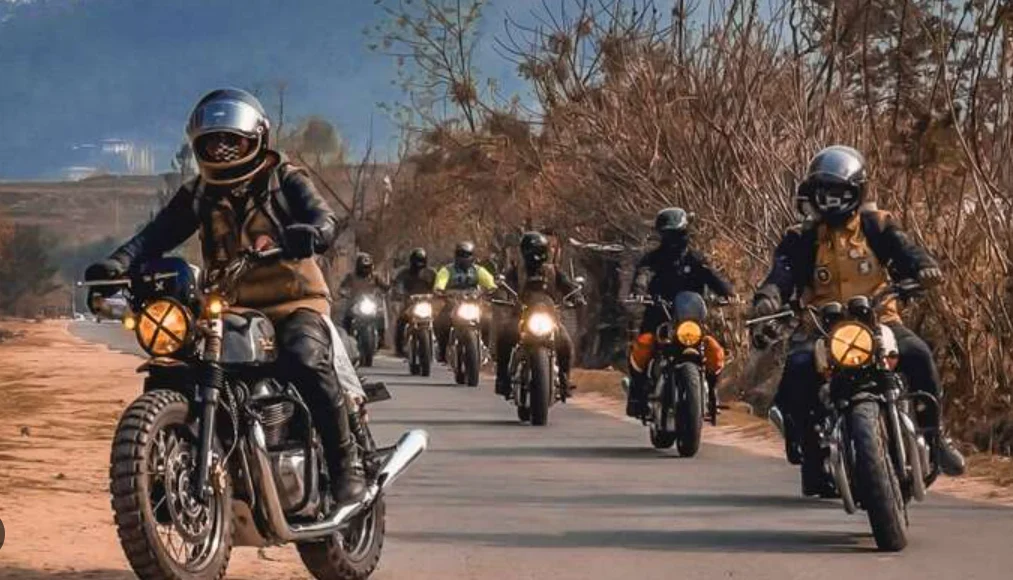
There is a road in Bhutan where the longest straight stretch is the airport runway. That single fact tells you everything you need to know about why the best roads in Bhutan for motorcycle tour are unlike anything else on earth. Every kilometer curves, every ascent rewards, and every pass delivers a view that makes you stop the engine just to stare.
Bhutan sits tucked between China and India, roughly the size of Switzerland, yet it packs in some of the most dramatic riding terrain on the planet. Straight roads barely exist here. Traffic is nearly absent. The passes climb above 4,000 meters. And the culture waiting at every valley floor — ancient dzongs, prayer flags snapping in the Himalayan wind, monks in crimson robes — turns a ride into a genuine pilgrimage.
In this guide, you will find seven of the best roads in Bhutan for motorcycle tour, broken down route by route with elevations, distances, riding difficulty, and the insider details that most guides skip entirely.
Table of Contents
At a Glance: Bhutan Motorcycle Tour Quick Facts
| Detail | Info |
|---|---|
| Best riding season | March–May and September–November |
| Highest motorable pass | Chele La — 3,988 m (13,083 ft) |
| Longest highway | Lateral Road — 713 km west to east |
| Average curves per km | 10 (no meaningful straight roads) |
| Recommended bike | Royal Enfield 350cc–500cc or similar |
| Road condition | Mostly paved; remote eastern roads rougher |
| Traffic | Exceptionally light — one of Asia’s emptieast roads |
| Permit required | Yes — Sustainable Development Fee + route permit |
Why Bhutan Is a Motorcycle Rider’s Secret Paradise
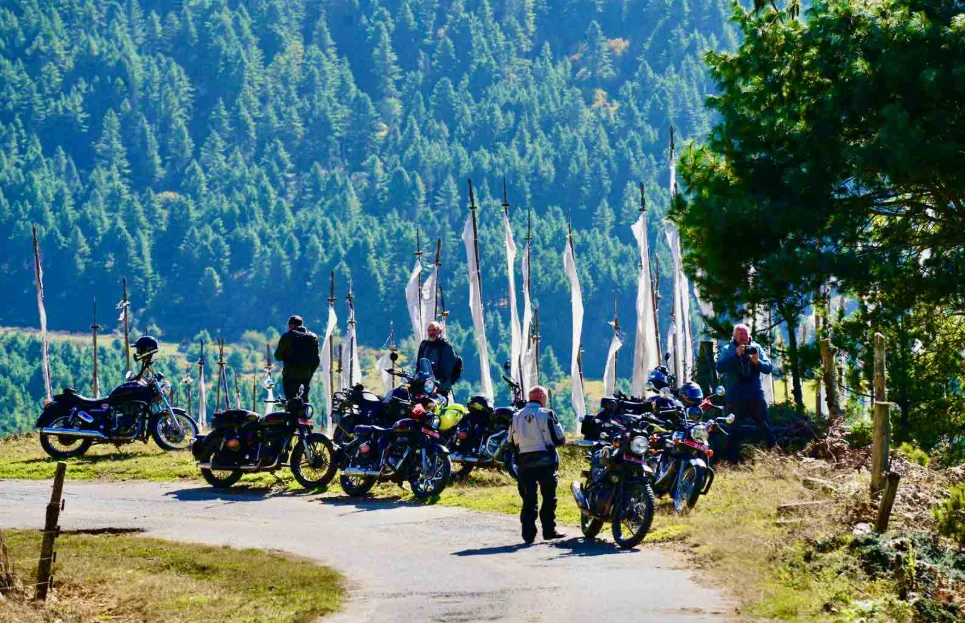
Most riders who first discover the best roads in Bhutan for motorcycle tour describe a feeling of disbelief. The country has no traffic signals in its capital city, Thimphu. The roads wind through national parks where blue pines tower overhead and rivers rush far below. You can ride for hours without seeing more than a handful of vehicles.
What makes Bhutan scenic roads so special for two-wheelers is not just the scenery — it is the combination of factors that rarely align anywhere else. Near-zero traffic, well-maintained primary roads, frequent high-altitude passes, dramatic elevation changes within short distances, and a culture that is genuinely warm toward respectful visitors. On a motorcycle, you feel every one of these things deeply.
The kingdom’s geography forces all roads through mountain terrain. There are no flat plains to cut across. Every route is a pass route, which means Bhutan bike routes are inherently dramatic by design. You do not have to seek out the adventure — the landscape delivers it with every turn.
One practical note: Bhutan requires all visitors to obtain permits and, for international tourists, to book through a licensed tour operator. Bhutan Cultural Tours handles all permits and logistics for motorcycle riders, letting you focus entirely on the road ahead.
Route 1: Paro to Thimphu — The Warm-Up Classic
Distance: 65 km | Elevation gain: ~900 m | Riding time: 1.5–2.5 hours | Difficulty: Beginner
Every great motorcycle tour in Bhutan starts here. The road from Paro to Thimphu follows the Paro River upstream before climbing through dense conifer forests into the capital valley. It is the first stretch most riders cover after landing at Paro International Airport, and it sets the tone perfectly.
The road quality on this section is among the best in the country — wide, smooth tarmac with a consistent surface that lets you settle into your bike and begin reading the rhythm of Bhutanese roads. The curves are moderate, the gradient is friendly, and the riverbanks below offer constant visual reward.
What to Expect on This Road
Do not rush this section. The Paro Valley itself deserves time — ancient farmhouses painted in traditional Bhutanese style, the Ta Dzong watchtower perched above the valley, and the Rinpung Dzong fortress reflected in the river below. Many riders choose to spend a full day in Paro before riding to Thimphu, using the day to visit the Tiger’s Nest Monastery (Taktshang), which sits at 3,120 meters above the valley floor and is reachable by a 2–3 hour hike.
The best roads in Bhutan for motorcycle tour almost always begin in Paro, and this opening leg is the perfect calibration ride before the passes ahead.

Route 2: Thimphu to Punakha via Dochula Pass — The Showpiece Route
Distance: 77 km | Elevation: Dochula Pass at 3,100 m | Riding time: 2–3 hours | Difficulty: Intermediate
If you ride only one stretch on your Bhutan motorcycle tour, make it this one. The climb from Thimphu up to Dochula Pass is steady and wide, with curves engineered so generously that the bike feels planted even at higher speed. The tarmac here is excellent, and the ascent through towering rhododendron forest — blazing red and pink during April — is one of the most beautiful riding experiences in Asia.
At the summit of Dochula Pass (3,100 m), the 108 Druk Wangyal Chortens stand in a circle against the sky. On a clear winter morning between October and February, the panorama of snow-capped Himalayan peaks stretches across the full horizon — a view that has stopped countless riders cold.
The Descent into Punakha
The descent from Dochula toward Punakha is where Bhutan scenic roads reveal their full character. The temperature rises noticeably as you lose altitude, vegetation shifts from alpine pine to subtropical broadleaf, and the air thickens pleasantly. The road flows with wide, banked curves that reward confidence. By the time you reach the Punakha Valley floor, you have descended nearly 1,500 meters in under 40 kilometers — a descent that professional riders consistently rank among the best roads in Bhutan for motorcycle tour.
Punakha itself holds the Punakha Dzong, the most beautiful fortress-monastery in Bhutan, sitting at the confluence of the Pho Chhu and Mo Chhu rivers. Stop here. Take your helmet off. You have earned the view.
Route 3: Paro to Haa Valley via Chele La Pass — The Summit Seeker
Distance: Paro to Chele La — 35 km | Elevation: 3,988 m at summit | Riding time: 1.5–2 hours one way | Difficulty: Advanced
Chele La Pass is the crown jewel of Bhutan bike routes. At 3,988 meters above sea level, it is the highest motorable point in the entire kingdom and commands a 360-degree view that includes Mount Jomolhari and the sacred peak of Jichu Drake. On a clear day, the Himalayan panorama here is absolute.
The road was built in the 1990s and is narrow and steep with sharp hairpin turns and sheer drops on the valley side. The asphalt surface is generally good but can deteriorate quickly in winter when snow and ice make the pass treacherous. The ideal riding window is March to May and September to November.
Riding Chele La: What No One Tells You
Most guides describe Chele La as a viewpoint. Experienced riders know it is a technical climb that demands full attention. The hairpins tighten as you gain elevation. Weather can shift in minutes — warm sunshine at the base can turn to cloud and wind within 30 minutes of riding. Carry a windproof layer regardless of conditions at Paro.
The descent into Haa Valley on the far side of the pass is a different experience entirely — quieter and more isolated, with a valley so rarely visited that its traditional Bhutanese character feels completely preserved. Haa town is small, local, and genuinely off the tourist circuit.
The Kila Goempa Nunnery, perched dramatically on the cliffside just below the pass, is visible from the road and reachable by a short steep hike — a worthwhile stop if your legs still have something in them after the climb.
Route 4: Wangdue Phodrang to Gangtey via Phobjikha Valley — The Hidden Gem
Distance: 48 km | Elevation: Pelela Pass at 3,300 m | Riding time: 1.5–2 hours | Difficulty: Intermediate
Most motorcycle tour itineraries hit Dochula and Chele La, then move east. The Phobjikha Valley detour via Pelela Pass is where experienced riders separate themselves from the standard tourist circuit, and it rewards that choice generously.
The road from Wangdue Phodrang climbs steadily to Pelela Pass (3,300 m) before dropping into the Phobjikha Valley — a wide, open glacial basin unlike anything else in Bhutan. After the tight mountain corridors of the western routes, this valley feels impossibly spacious. The valley is a designated conservation area and serves as winter habitat for the rare black-necked crane, which arrives from Tibet between October and March.
Why This Road Belongs on Your Bhutan Motorcycle Tour
The Phobjikha road is a sustained mountain ride — long enough to establish a real rhythm, technical enough to stay engaged, and scenic enough to make every stop feel justified. The vegetation change is dramatic: subtropical forest at the valley floor gives way to dwarf bamboo and rhododendron scrub near the pass, then opens into alpine meadow as Phobjikha appears.
The Gangtey Goempa monastery sits on a forested ridge above the valley and is one of the most important Nyingmapa temples in Bhutan. Few visitors arrive by motorcycle, which makes your arrival slightly remarkable to the monks and locals who watch you roll in.
This is one of those Bhutan scenic roads that the best riders quietly recommend to each other.
Route 5: Trongsa to Bumthang — The Spiritual Heartland Road
Distance: 68 km | Elevation: Yutongla Pass at 3,400 m | Riding time: 2–3 hours | Difficulty: Intermediate
Bumthang is the spiritual heartland of Bhutan — a cluster of four valleys holding some of the oldest temples in the kingdom, all connected by quiet roads that wind past buckwheat fields and apple orchards. The approach from Trongsa is the finest way to arrive.
The road from Trongsa rises through thick forest past the imposing Trongsa Dzong — the ancestral fortress of Bhutan’s royal family — and climbs to Yutongla Pass at 3,400 meters before descending into the Bumthang Valley. The Yutongla section is quieter than the more famous passes, and that is precisely its charm. The road surface is reliable, the curves come at a comfortable pace, and the forest is dense enough that you ride in a tunnel of green for long stretches.
Bumthang as a Base for Bhutan Bike Routes
Bumthang is the best base for exploring the central section of Bhutan bike routes. The four valleys — Chokhor, Tang, Ura, and Chhume — are all accessible by day rides. The roads here are smaller and more rural than the main lateral highway, meaning you will encounter more cattle, more local foot traffic, and more genuine Bhutanese village life.
The Ura Valley, sitting at 3,100 meters, is the highest and most isolated of the four. Its cobblestone village streets and annual festival atmosphere make it feel entirely medieval — a feeling amplified significantly when you arrive on two wheels.

Route 6: Bumthang to Mongar via Thrumshingla Pass — The Epic Eastern Crossing
Distance: 196 km | Elevation: Thrumshingla Pass at 3,780 m | Riding time: 6–8 hours | Difficulty: Advanced
This is the big one. The crossing from Bumthang east to Mongar via Thrumshingla Pass is the single most demanding and most rewarding full-day ride on any Bhutan motorcycle tour. At 3,780 meters, Thrumshingla is the second-highest motorable pass in the country, and the road that leads to it from the Ura Valley side is a slow, relentless climb through national park territory that feels genuinely remote.
The pass sits within Thrumshingla National Park, and the forest on either side is dense, dark blue-green pine punctuated by sudden clearings where the Himalayan peaks of central Bhutan appear without warning. The road surface varies — the western approach from Bumthang is generally good, while the eastern descent toward Mongar becomes narrower, steeper, and rougher in places.
What Makes This the Best Road in Bhutan for Serious Motorcycle Riders
The statistics alone are impressive: 196 kilometers, one major pass above 3,700 meters, over 7 hours in the saddle. But it is the isolation that defines this ride. For long stretches, you will see no other vehicles, no towns, no visible human presence beyond the road itself. The eastern descent drops through subtropical forest into deep valleys where the vegetation turns lush and tropical — a completely different world from the alpine scenery at the summit.
Mongar itself is a small hill town perched at 1,600 meters with a traditional dzong and local market. Arriving here in the evening after a full crossing of Thrumshingla is one of the defining moments of any Bhutan road trip on bike.
Route 7: Mongar to Trashigang — The Road Less Ridden
Distance: 92 km | Elevation: Kori La Pass | Riding time: 3–4 hours | Difficulty: Intermediate-Advanced
Eastern Bhutan receives fewer than 5% of the country’s total visitors. The road from Mongar to Trashigang passes through this rarely seen landscape — deep river gorges, subtropical forest, and traditional villages where life continues largely as it has for centuries.
The road crosses the Chazam iron bridge over the Dangme Chhu river before climbing to Kori La and descending into Trashigang, Bhutan’s second-largest town and the gateway to the eastern frontier. The roads here are narrower and the gradients steeper than western Bhutan, and the surfaces can be unpredictable outside dry season.
What you gain is solitude, raw scenery, and the authentic experience of a country most travelers never see. On a motorcycle, this eastern section of the best roads in Bhutan for motorcycle tour connects you to a Bhutan that exists entirely outside the standard tourist trail.

Practical Tips for Your Bhutan Motorcycle Tour
Best Time to Ride
The two ideal windows for the best roads in Bhutan for motorcycle tour are March to May (spring) and September to November (autumn). Spring brings rhododendron blooms at altitude and clear skies after winter. Autumn offers the crispest air, the best visibility for Himalayan views, and stable road conditions.
Avoid December through February for high passes — Chele La and Thrumshingla are often snow-covered and dangerous. Monsoon season (June–August) brings road damage and poor visibility on mountain stretches.
Permits and Regulations
All international tourists in Bhutan must pay the Sustainable Development Fee (SDF). Foreign motorcycles require additional permits to enter the country. Domestic Indian riders traveling from the border at Phuentsholing or Samdrup Jongkhar have a different permit structure. Bhutan Cultural Tours manages the full permit process, ensuring your route is pre-approved and your paperwork is in order before you ride.
Recommended Motorcycles
Royal Enfield 350cc and 500cc models are the most common choice for guided tours — widely available for hire, reliable on Bhutanese roads, and with decent ground clearance for rougher eastern sections. If bringing your own bike from India, a Royal Enfield Himalayan, KTM 390 Adventure, or similar mid-range adventure bike is ideal.
Altitude Acclimatization
Several Bhutan scenic roads cross above 3,500 meters. Riders not acclimatized to altitude can experience headaches, fatigue, and reduced reaction time — all dangerous on mountain roads with sheer drops. Spend your first day at lower elevation in Paro or Thimphu before attempting any high passes. Drink plenty of water, reduce speed at altitude, and stop if you feel unwell.
Comparison: Bhutan Motorcycle Routes at a Glance
| Route | Distance | Max Elevation | Difficulty | Best Feature |
|---|---|---|---|---|
| Paro to Thimphu | 65 km | ~2,500 m | Beginner | River valley scenery |
| Thimphu to Punakha | 77 km | 3,100 m | Intermediate | 108 chortens, Himalayan views |
| Paro to Chele La | 35 km | 3,988 m | Advanced | Highest pass, Jomolhari views |
| Wangdue to Gangtey | 48 km | 3,300 m | Intermediate | Black-necked cranes, open valley |
| Trongsa to Bumthang | 68 km | 3,400 m | Intermediate | Spiritual heartland, monasteries |
| Bumthang to Mongar | 196 km | 3,780 m | Advanced | Epic full-day crossing |
| Mongar to Trashigang | 92 km | ~1,800 m | Int-Advanced | Remote eastern Bhutan |
Frequently Asked Questions
What are the best roads in Bhutan for motorcycle tour?
The best roads in Bhutan for motorcycle tour include the Thimphu–Punakha stretch via Dochula Pass (3,100 m) for intermediate riders, the Paro–Chele La Pass road (3,988 m) for advanced riders, and the Bumthang–Mongar crossing via Thrumshingla Pass (3,780 m) for those seeking a full-day epic. Each route offers dramatic elevation, minimal traffic, and outstanding scenery. The Lateral Road, which runs 713 km from Phuentsholing in the west to Trashigang in the east, connects all major routes and forms the backbone of any multi-week motorcycle tour in Bhutan.
Do I need a permit to ride a motorcycle in Bhutan?
Yes. All visitors to Bhutan require entry permits, and foreign-registered motorcycles require additional vehicle permits. Indian citizens can ride their registered bikes from the border under specific conditions. International riders typically hire motorcycles from licensed operators inside Bhutan. Booking through a licensed agency such as Bhutan Cultural Tours ensures all permits are arranged correctly before your tour begins.
What is the highest motorable road in Bhutan?
Chele La Pass, at 3,988 meters (13,083 feet) above sea level, is the highest motorable point in Bhutan. It sits on the Bondey–Haa Highway, approximately 35 km from Paro. The road is narrow and steep with sharp hairpins, and it can be closed or extremely hazardous in winter due to snow and ice. The best time to ride Chele La is between March and May or September and November.
What is the best time for a motorcycle tour in Bhutan?
The two optimal seasons are spring (March to May) and autumn (September to November). Spring brings blooming rhododendrons and clear skies after the winter freeze. Autumn offers the most stable weather, sharpest visibility, and the best conditions on high-altitude passes. Avoid the monsoon period from June to August, when roads can suffer damage and visibility drops significantly on mountain stretches.
Can beginners ride a motorcycle in Bhutan?
Yes, though with important caveats. Western Bhutan routes — particularly Paro to Thimphu and the Thimphu–Punakha road — are suitable for riders with basic mountain road experience. High-altitude passes like Chele La and Thrumshingla are strictly for experienced riders comfortable with hairpin turns, narrow roads, sheer drops, and unpredictable weather at altitude. A guided tour with an experienced local escort significantly reduces risk for all skill levels on Bhutan bike routes.
How many days do I need for a motorcycle tour in Bhutan?
A minimum of 7–10 days allows you to cover the western circuit (Paro, Thimphu, Punakha, Gangtey, Bumthang) at a comfortable pace. A full cross-country ride from Phuentsholing to Trashigang along the Lateral Road requires 12–14 days to do justice to the scenery and culture along the route. Rushing the best roads in Bhutan for motorcycle tour defeats the purpose — this country rewards slow travel enormously.
Start Your Bhutan Motorcycle Tour With the Right Team
The best roads in Bhutan for motorcycle tour are waiting — from the swooping descent off Dochula into the Punakha Valley to the raw isolation of the Thrumshingla crossing in the east. These are roads that change how you think about riding.
Planning a motorcycle tour in Bhutan requires local expertise: permits, route planning, altitude-aware itineraries, vehicle logistics, and the cultural knowledge to make every valley stop meaningful. Bhutan Cultural Tours specializes in exactly this — creating personalized motorcycle journeys for riders who want to experience Bhutan beyond the surface.
Book your dream motorcycle tour with Bhutan Cultural Tours today. The passes are clear, the roads are empty, and the Thunder Dragon kingdom is waiting for you.