
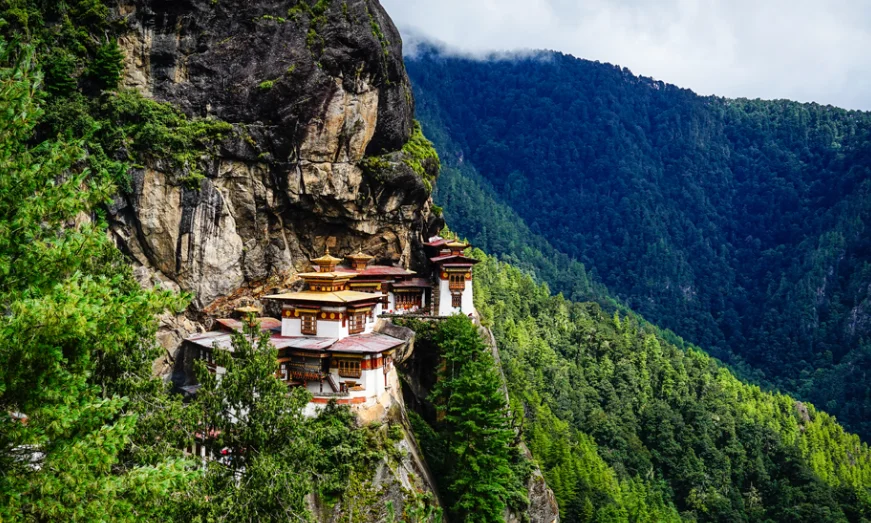
Most travelers land in a new Asian country and see traffic jams, billboards, and a race toward modernization. Land in Bhutan and you see almost none of that — and there is a reason for it. If you have ever wondered why Bhutan is different from other Asian countries, the answer starts with a single decision the Bhutanese royal family made decades ago: growth would never come before happiness, culture, or the environment.
That one choice shaped everything from the country’s architecture to its visa policy, and it is why so many first-time visitors say Bhutan feels unlike anywhere else they have traveled. In this guide, we break down exactly why Bhutan is different from other Asian countries — culturally, economically, environmentally, and spiritually — so you understand precisely what makes Bhutan unique before you book your trip.
Table of Contents
Quick Facts: At a Glance
- Capital: Thimphu — the only capital city in Asia with no traffic lights
- Government philosophy: Gross National Happiness (GNH), not GDP
- Environmental status: The world’s only carbon-negative country
- Tourism model: High-value, low-volume, with a Sustainable Development Fee (SDF) of USD 100 per person, per night
- Religion: Vajrayana Buddhism, practiced by roughly 84% of the population
- Opened to tourism: 1974 — television was not permitted until 1999
- Forest cover: Over 70%, constitutionally protected to never fall below 60%
1. Why Bhutan Is Different From Other Asian Countries: It Measures Happiness, Not GDP
This is the single biggest reason why Bhutan is different from other Asian countries, and it is not a marketing slogan. Since the 1970s, the Bhutanese government has used the Gross National Happiness Index instead of Gross Domestic Product as its core measure of national progress. Every major policy — from road construction to hotel licensing — is evaluated against four pillars: sustainable development, environmental protection, cultural preservation, and good governance.
What This Means for Travelers
You will notice this philosophy everywhere, and it is exactly what makes Bhutan unique among its neighbors. Guides speak about wellbeing with the same seriousness other countries reserve for economic statistics. Development happens slowly and deliberately, which is precisely why Bhutan is different from other Asian countries racing to modernize as fast as possible. Nothing here is built purely for profit; it has to pass the happiness test first. Even hotel construction and road expansion projects are paused if they conflict with the Gross National Happiness framework, something almost no other government in the world would consider doing.
2. It Is the World’s Only Carbon-Negative Country
While most nations are still chasing carbon neutrality, Bhutan already absorbs more carbon dioxide than it produces. Its forests, protected by constitutional law to never drop below 60% of total land area, act as a massive natural carbon sink. Combined with nearly all of its electricity coming from hydropower, Bhutan actually removes more greenhouse gases from the atmosphere than it emits.
This environmental record is one of the clearest unique things about Bhutan and a major answer to why Bhutan is different from other Asian countries that are still industrializing rapidly. Sandwiched between two of the world’s largest carbon emitters, India and China, Bhutan has taken the opposite path entirely — and it shows in the untouched valleys, clean air, and dense pine forests you will pass on every drive between towns. Nowhere else in Bhutan culture compared to Asia’s other nations will you find an entire national identity built around giving more to the planet than it takes.
3. Tourism Runs on “High Value, Low Volume,” Not Mass Tourism
Unlike neighboring destinations that welcome millions of visitors a year, Bhutan deliberately limits and regulates its tourist numbers. Every international visitor pays a Sustainable Development Fee — currently USD 100 per person, per night — which funds free healthcare, free education, and environmental conservation for Bhutanese citizens.
How the SDF Shapes Your Trip
- The fee is paid in advance through a licensed tour operator
- It is separate from your accommodation, meals, and guide costs
- Children under 5 are exempt; ages 6–12 pay a reduced rate
- The funds go directly to the national treasury, not a private company
This structure is another clear example of why Bhutan is different from other Asian countries when it comes to tourism policy. Instead of chasing visitor numbers, Bhutan protects the experience quality for every traveler who does come, and every guest becomes a direct contributor to the country’s development rather than a strain on it. Ask any traveler who has compared both, and Bhutan vs other Asian countries almost always comes down to this single point: here, your money funds hospitals and schools, not just a tour company’s margin.
4. Bhutanese Culture Was Never Colonized or Diluted
Bhutan has never been colonized, and it remained largely closed to the outside world until 1974. Television only arrived in 1999. That isolation preserved a cultural identity you simply cannot find intact elsewhere in the region. Traditional dress — the gho for men and kira for women — is still worn daily, not just for festivals. Dzong fortresses, built without a single nail or architectural blueprint, still function as centers of both government and Buddhist monastic life.
This unbroken cultural thread is a huge part of why Bhutan is different from other Asian countries where globalization has reshaped daily life, fashion, and architecture over the past century. In Bhutan, tradition is not a tourist performance; it is simply how people live. Civil servants, students, and monks alike wear the gho and kira into government offices, something that immediately signals what makes Bhutan unique the moment you land in Paro.

5. Vajrayana Buddhism Shapes Daily Life, Not Just Temples
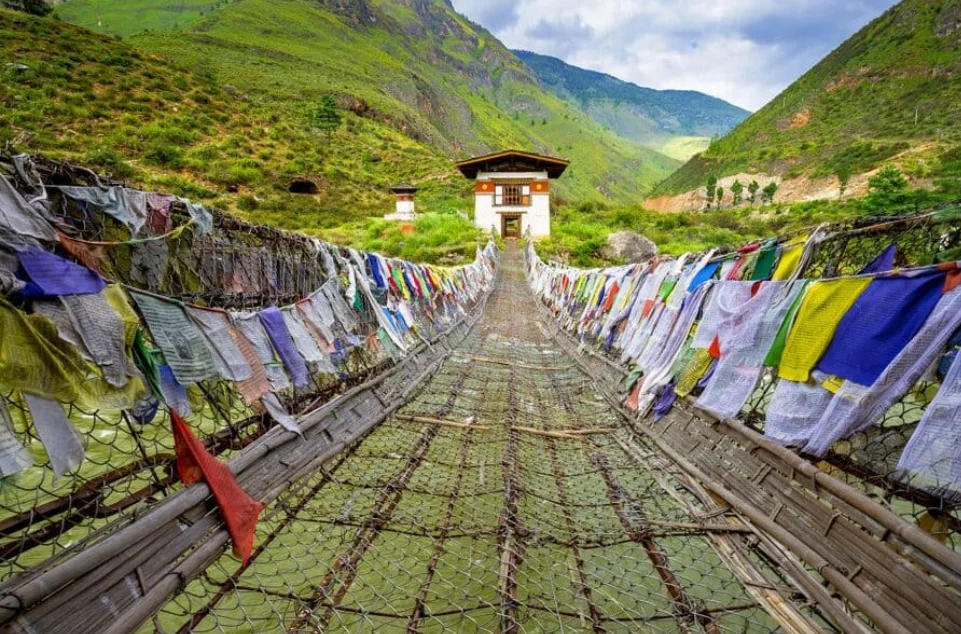
While Buddhism is practiced across much of Asia, the Vajrayana school followed in Bhutan is distinct in its rituals, monastic structure, and integration into everyday governance. The Je Khenpo, the head of Bhutan’s state religion, holds a position of genuine national influence. Prayer flags, chortens, and monasteries are not roadside attractions here — they are part of the working landscape, woven into farming, travel, and even government ceremony.
This spiritual depth is another one of the unique things about Bhutan that visitors notice within hours of arrival. Locals consult monks before major life decisions, festivals follow the lunar calendar rather than a fixed date, and nearly every home has a private altar room. Comparing Bhutan culture compared to Asia’s other Buddhist nations, few places have kept religion this integrated into daily governance and family life.
Bhutan vs Other Asian Countries: A Quick Comparison
| Feature | Bhutan | Typical Asian Destination |
|---|---|---|
| Development metric | Gross National Happiness | GDP growth |
| Tourism model | High-value, low-volume with SDF | Mass tourism, unlimited entry |
| Environmental status | Carbon-negative | Carbon-emitting |
| Colonization history | Never colonized | Often colonized or occupied |
| Traffic lights in capital | Zero | Common |
| Cultural dress | Worn daily, mandated in public buildings | Mostly reserved for festivals |
6. The Landscape Itself Shows Why Bhutan Is Different From Other Asian Countries
Geography plays a real role here too. Wedged into the Eastern Himalayas between China and India, Bhutan’s mountainous terrain historically made large-scale development nearly impossible. The first road was not built until the 1960s. That slow start, paired with strict conservation laws, means valleys, rivers, and forests here look much the same as they did generations ago — something increasingly rare across a region transformed by rapid industrial growth.
Insider Tip
Ask your guide about the difference between eastern and western Bhutan. Western valleys like Paro and Thimphu see the most visitors, while eastern Bhutan remains far less touristed, with villages that see only a handful of foreign guests each year. This regional contrast is one more of the unique things about Bhutan that even seasoned Asia travelers rarely expect.
7. Governance Balances Tradition With Modern Democracy
Bhutan transitioned from absolute monarchy to a parliamentary democracy in 2008 — by choice, initiated by the king himself rather than through revolution or external pressure. This peaceful, self-directed political evolution is yet another reason why Bhutan is different from other Asian countries, many of which experienced turbulent transitions to democratic rule. The monarchy remains deeply respected and culturally central, while day-to-day governance sits with an elected parliament and prime minister. Understanding this history is part of understanding what makes Bhutan unique long before you ever board your flight to Paro. It is also worth remembering why Bhutan is different from other Asian countries politically: this shift happened through royal choice, not conflict.
8. Language, Food, and Daily Rhythms Feel Genuinely Different
Dzongkha is the national language, though Sharchopkha and Lhotshamkha are also widely spoken depending on the region — a linguistic diversity packed into a country smaller than Switzerland. Bhutanese cuisine centers on ema datshi, a fiery dish of chilies and cheese eaten at nearly every meal, alongside red rice grown in high-altitude terraces. Meals are simple, unhurried, and built around family rather than restaurant culture.
Even the pace of a normal day — shops opening late, long lunch breaks, evenings spent with family — reflects the same happiness-first philosophy behind Gross National Happiness. Taken together, these small daily rhythms are exactly why Bhutan is different from other Asian countries in ways you feel rather than just read about. Even a simple family dinner here reflects why Bhutan is different from other Asian countries where restaurant culture and fast-paced city living have largely replaced home-cooked, unhurried meals.
Travelers who have visited Thailand, Vietnam, or Nepal often say the biggest surprise is just how much slower and quieter Bhutan feels by comparison — another everyday example of why Bhutan is different from other Asian countries in ways no brochure can fully capture.

Frequently Asked Questions
Why is Bhutan considered so different from other Asian countries?
Bhutan prioritizes Gross National Happiness over GDP, limits tourism through a Sustainable Development Fee, remains carbon-negative, and preserves a culture that was never colonized. Together, these factors explain why Bhutan is different from other Asian countries in nearly every measurable way.
Is Bhutan more expensive than other Asian countries to visit?
Yes, largely because of the Sustainable Development Fee, which currently costs USD 100 per person, per night. That cost funds healthcare, education, and conservation rather than going to a private company, which is part of why Bhutan is different from other Asian countries in how it approaches tourism revenue.
Why does Bhutan measure happiness instead of GDP?
The Bhutanese monarchy formally adopted Gross National Happiness in the 1970s, believing that material growth should never come at the expense of culture, environment, or wellbeing. It remains the philosophical foundation behind nearly every government decision today and is central to what makes Bhutan unique.
What makes Bhutanese culture unique compared to its neighbors?
Bhutan was never colonized and stayed closed to outside influence until 1974, which allowed traditional dress, dzong architecture, and Vajrayana Buddhist practice to remain part of daily life rather than fading into festival-only traditions. These are some of the clearest unique things about Bhutan you will notice on any visit.
Is Bhutan safe and easy to travel around compared to other Asian countries?
Bhutan is considered one of the safest countries in Asia, with low crime rates and a tightly regulated tourism system. Because all visitors travel with a licensed guide and operator, logistics are simpler than in many self-guided Asian destinations, even though independent backpacking is not permitted.

Final Thoughts: What Makes Bhutan Truly One of a Kind
Once you understand why Bhutan is different from other Asian countries, the higher travel cost and slower pace of a trip here start to make complete sense. This is not a destination built around volume, speed, or profit. It is a country that measures success in happiness, protects more forest than it needs to, and asks every visitor to become part of that mission the moment they arrive. Few places in Asia — or the world — can claim that combination of untouched culture, environmental leadership, and deliberate, values-driven tourism. That combination is, in the end, what makes Bhutan unique on a continent racing in the opposite direction.
If you are ready to experience firsthand why Bhutan is different from other Asian countries, Bhutan Cultural Tours can design a licensed, fully guided journey through Thimphu, Paro, Punakha, and beyond. Start planning today with Bhutan Cultural Tours, and discover a kingdom that never chased the rest of the world — and never needed to.


