
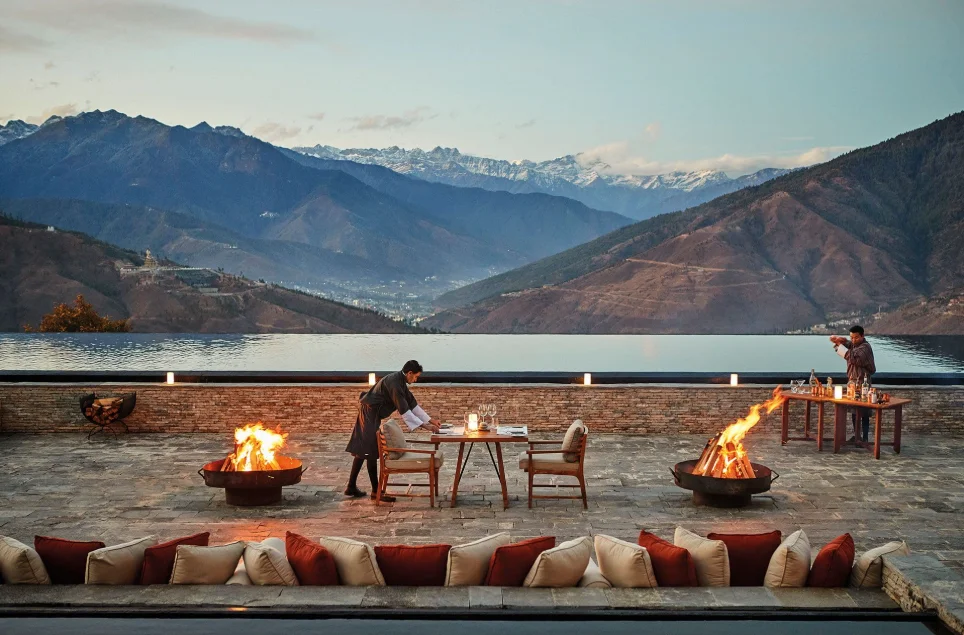
Stepping off the plane at Paro International Airport, you feel it immediately—the crisp Himalayan air, the prayer flags dancing in the wind, and the weight of a decision that will define your entire trip: where will you rest your head in this sacred kingdom?
Table of Contents
Bhutan luxury hotels aren’t just places to sleep. They’re gateways to one of the world’s most exclusive travel experiences, where your room isn’t just a room, but a sanctuary nestled between mountain peaks, overlooking valleys untouched by commercial tourism. But here’s what most travel blogs won’t tell you: luxury hotels in Bhutan demand serious consideration before booking. Prices start at $600 a night and climb toward $1,100+. You’ll need to factor in the mandatory Sustainable Development Fee. And honestly, not every traveler’s definition of “luxury” matches what you’ll find here.
This guide cuts through the marketing noise and gives you the truth about luxury hotels in Bhutan from someone who understands what makes each property genuinely different—and whether that difference justifies the investment.
At a Glance: Bhutan Luxury Hotels Quick Facts
- Price Range: $450–$1,100+ per night (depending on room type and season)
- Sustainable Development Fee: $250 USD per person per day (high season) / $200 USD per person per day (low season)
- Best Time to Visit: March–May and September–November
- Essential Booking Timeline: 2–3 months in advance for high season
- Luxury Hotel Requirement: Mandatory professional tour guide (not optional)
- Top-Rated Luxury Chains: Six Senses, COMO, Amankora, Taj Hotels
- Average Stay Duration: 3–7 days (most travelers stay 4–6 days)
- Ground Transportation: All transfers included with hotel packages
Understanding Bhutan Luxury Hotels: Beyond the 5-Star Rating
Bhutan luxury hotels operate differently than Western interpretations of luxury. The kingdom has deliberately chosen low-volume, high-value tourism over mass-market development. This philosophy filters into every aspect of accommodation.
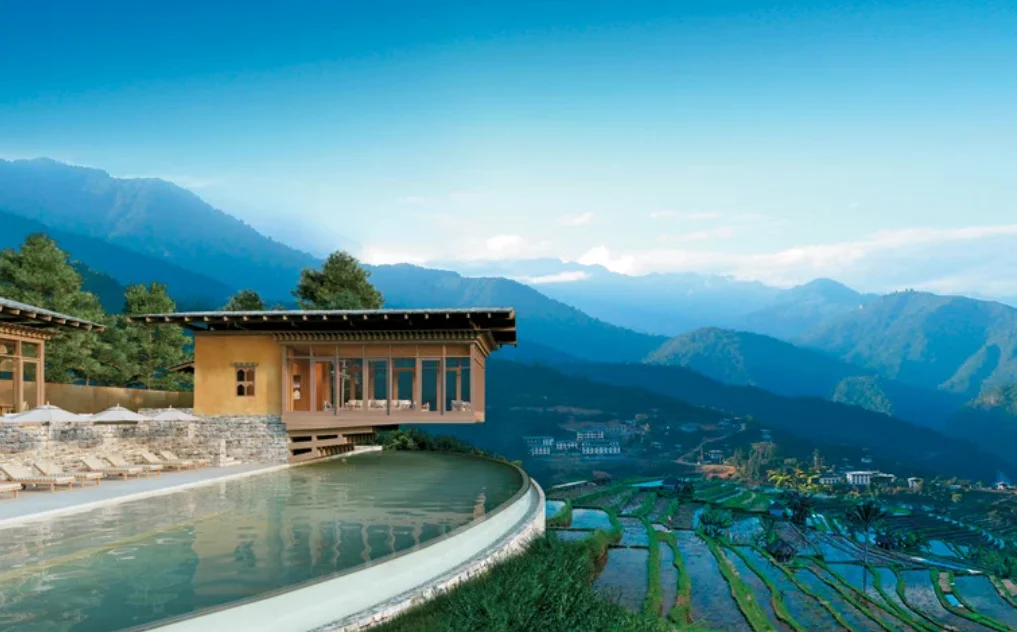
When you book a luxury hotel in Bhutan, you’re not paying for marble lobbies or celebrity chef restaurants. You’re investing in something far more valuable: authentic Himalayan hospitality, unparalleled mountain views, wellness-focused design, and direct access to spiritual and cultural experiences most tourists never experience. The Bhutanese built their luxury properties to blend seamlessly into the landscape—traditional architectural styles mixed with modern comfort, never dominating the natural environment.
Every luxury hotel in Bhutan requires guests to book through a licensed tour operator and hire a professional guide (typically included in multi-day packages). This isn’t a limitation—it’s a feature. Your guide ensures you visit monasteries at the right times, understand the cultural significance of what you’re experiencing, and access locations that independent travelers simply cannot reach.
The architecture tells the story. Walk into any proper luxury hotel in Bhutan and you’ll notice: traditional hand-painted wooden beams, locally sourced stone, artisan-crafted textiles, and furnishings that reflect Bhutanese aesthetics. This isn’t theme-park luxury—it’s culturally rooted luxury that enhances rather than exploits the destination.
Six Senses Bhutan: The Multi-Property Luxury Circuit
Six Senses pioneered the “luxury lodge circuit” concept in Bhutan, and their multi-property experience remains the gold standard for travelers seeking comprehensive kingdom exploration without packing and unpacking repeatedly.
The Six Senses portfolio includes five distinct properties: Thimphu, Punakha, Gangtey, and Paro (with multiple locations). Each lodge features 20–25 villas or suites with private outdoor spaces, indoor pools, and heated bathrooms—essential comforts in a mountain climate. The design philosophy emphasizes wellness and environmental integration.
Nightly rates for Six Senses Bhutan properties range from $650–$850 depending on room type and season. A typical 5-night circuit including meals, guides, and excursions runs approximately $4,500–$5,500 per person.
What sets Six Senses apart is the wellness integration. Each property features a spa offering traditional Bhutanese hot stone baths, organic skincare treatments, and meditation spaces overlooking valleys. The multi-lodge arrangement means you experience different regions—from the spiritual energy of Thimphu to the agricultural heartland of Punakha—without constant travel disruption.
The critical consideration: Six Senses properties fill months in advance. March, April, May, September, October, and November are nearly fully booked by mid-year. Luxury hotel availability in Bhutan requires early planning—often 8–12 weeks for five-star properties.
COMO Bhutan: Understated Elegance and Himalayan Serenity
COMO opened in Paro and Punakha, positioning itself as the alternative to Six Senses’ extensive circuit approach. The brand philosophy emphasizes intimacy and wellness, with only 26–32 rooms per property.
COMO Uma Paro sits on a hilltop overlooking the Paro Valley, designed as a collection of private villas rather than a traditional hotel building. This approach creates genuine seclusion. Your villa features a private terrace, heated flooring (essential in Himalayan winters), and viewing platforms oriented toward the valley. Many guests mention that their most memorable moments happen sitting on their personal outdoor spaces watching prayer flags catch the evening light.
COMO Uma Punakha positions itself as the wellness heart of their Bhutan properties. The Punakha Valley location offers proximity to monasteries, trekking trails, and fertile valleys that inform the property’s organic vegetable garden and locally sourced dining approach. Room rates typically run $550–$750 per night.
COMO properties emphasize personal service over luxury amenities. You won’t find excessive spa treatments or haute cuisine here—instead, you get incredibly attentive staff, curated experiences, and authentic encounters with local communities. This resonates strongly with travelers seeking substance over flash.

Amankora: The Luxury Circuit Pioneer
Amankora holds the distinction of being the first ultra-luxury resort established in Bhutan, operating five distinct properties (Thimphu, Paro, Punakha, Gangtey, and Bumthang) that function as an interconnected journey through the kingdom.
Amankora properties feature premium design incorporating 16th-century architectural ruins, traditional Bhutanese fortress (dzong) design elements, and contemporary comfort. Rooms average $900–$1,200 nightly. A 7-night Amankora journey easily exceeds $8,000 per person before including the mandatory Sustainable Development Fee.
The Amankora experience emphasizes rare access—private guide arrangements, exclusive monastery visits, and curated cultural encounters that standard group tours cannot offer. Many luxury hotel guests seeking Amankora properties are repeat visitors to Bhutan or travelers with deep cultural interests rather than first-time visitors.
The trade-off with Amankora’s premium positioning is exclusivity that borders on seclusion. Some travelers find the isolated luxury estates disconnecting from authentic Bhutanese community experiences. Others—particularly honeymooners and multi-generational family groups—view this as the ultimate appeal.

Zhiwa Ling Heritage: Bhutan-Owned Luxury Innovation
Zhiwa Ling represents something genuinely different: the first 5-star hotel in Bhutan designed, owned, and operated entirely by Bhutanese entrepreneurs.
Completed in 2019 after five years of construction using traditional building methods (famously, no single nail appears in the primary structure), Zhiwa Ling showcases contemporary Bhutanese luxury without copying international resort formulas. The 30-room property in Paro features striking modern architecture that respects traditional proportions and design elements.
Rooms start at $750 per night, with premium villas reaching $1,000+. What justifies the pricing is the uncompromising attention to Bhutanese craftsmanship. Artwork, furnishings, and decor are locally sourced and created specifically for the hotel. Guests frequently mention that Zhiwa Ling feels like staying in a high-end boutique gallery that happens to offer hospitality.
The property appeals strongly to travelers interested in supporting Bhutanese entrepreneurship and experiencing luxury from a Bhutanese perspective rather than through international brand interpretation.

Other Premier Luxury Hotels in Bhutan Worth Considering
Taj Paro Resort and Spa ($600–$800/night): Taj Hotels brings international luxury hospitality to Paro Valley with sophisticated design, premium spa facilities, and high-end dining. Strong choice for travelers seeking familiar luxury brand standards.
Gangtey Lodge ($550–$700/night): Intimate 8-room property in the remote Gangtey Valley. Designed as a traditional Bhutanese farmhouse with modern comforts. Perfect for travelers seeking genuine seclusion without ultra-luxury price tags.
Pemako Thimphu ($900–$1,100/night): Ultra-luxury city property in Thimphu with contemporary Asian design. Features multiple restaurants, spa, and cultural programming. Best for travelers prioritizing Thimphu’s cultural sites and vibrant atmosphere.
Dhensa Boutique Resort ($500–$650/night): Intimate 24-room property in Punakha Valley. Handmade Bhutanese artifacts, natural stone, and forest views create authentic mountain luxury at lower price points than Six Senses or COMO.
Pricing Breakdown: What Your Money Actually Covers
Here’s what luxury hotels in Bhutan typically include versus what you’ll pay separately:
Included in Nightly Room Rate:
- Accommodation (naturally)
- Breakfast (usually)
- Airport transfers
- Meals at the hotel (often lunch and dinner)
- Property facilities (pools, spa, gym)
- Professional tour guide service
- Most local excursions and monastery visits
- WiFi (usually)
NOT Included (Additional Costs):
- Sustainable Development Fee: $200–$250 USD per person daily
- Flights to/from Paro
- International travel insurance
- Visa fees
- Premium spa treatments beyond basic offerings
- Alcohol and beverages at bars
- Souvenir shopping
- Tips and gratuities (generally 15–20%)
Real Example Cost Breakdown (5-Night COMO Luxury Stay for 2 People):
- 5 nights accommodation @ $600/night: $3,000
- Meals (breakfast included, lunch/dinner average $50/day): $250
- Sustainable Development Fee ($225/person/day × 2 people × 5 days): $2,250
- Airport transfers and guide: included
- Activity entrance fees: $100–$200
Total Estimated Cost: $5,600–$5,750 for two people
This breaks down to approximately $2,800–$2,875 per person for 5 days of high-quality luxury accommodation and experiences.
Insider Tips That Hotel Websites Don’t Tell You
Shoulder Season Strategy: March–April and September–October offer superior weather, fewer tourists, and 20–30% lower nightly rates than peak May and November periods. Luxury hotels in Bhutan see less variation than budget properties, but the savings still matter.
Direct Booking Reality: You technically cannot book luxury hotels directly. The Bhutanese government requires all tourism to flow through licensed tour operators. However, Bhutan Cultural Tours and other reputable operators often negotiate better rates than published prices, especially for multi-night stays.
Room Type Matters Significantly: In similar properties, upgrading from standard to villa room types means price increases of 30–50% but brings private outdoor space—genuinely transformative in a mountain destination. The investment usually justifies itself.
Weather Windows: October 15–November 15 offers the absolute peak mountain visibility—clear skies, crisp mornings, incredible photography light. January through mid-March brings similar clarity with fewer tourists. Late May and August see monsoon precipitation that occasionally disrupts mountain views.
Staff Relationships: Bhutanese hospitality culture emphasizes personal connection. Staff at luxury hotels remember individual preferences and needs after just one interaction. A small gesture (noticing when they’ve remembered you) deepens the entire experience far beyond what hotel amenities offer.
Altitude Consideration: Bhutan’s luxury hotels range from 7,000–10,000 feet elevation. Even luxury properties with all modern comforts cannot eliminate the physiological reality of altitude. Take first-day easy, stay hydrated, and mention any altitude sensitivity to staff—they have protocols to manage this.
Frequently Asked Questions About Bhutan Luxury Hotels
Q: Can I visit Bhutan luxury hotels without staying overnight?
A: Technically no. Bhutan’s tourism policy requires visitors to book accommodations through licensed tour operators. If you’re visiting friends or family, you cannot simply check into a hotel independently—this applies to all accommodations regardless of price category.
Q: What’s the difference between 4-star and 5-star hotels in Bhutan?
A: Pricing primarily, with smaller differences than in other countries. Most 4-star properties in Bhutan offer comfort and cleanliness equal to 5-star properties globally. The 5-star designation typically reflects design sophistication, spa facilities, dining options, and location prestige rather than cleanliness or service standards, which remain high across categories.
Q: Is the Sustainable Development Fee worth it?
A: The fee directly funds conservation and community development, so philosophically most luxury travelers support it. Practically, yes—it ensures the kingdom maintains pristine environments and authentic cultural experiences that justify premium pricing for luxury hotel stays.
Q: Can I negotiate prices on luxury hotels in Bhutan?
A: Published rates are often flexible, particularly for multi-night bookings through tour operators like Bhutan Cultural Tours. Winter (January–February) and monsoon (July–August) seasons offer 15–25% discounts. Peak season prices are firm.
Q: How far in advance must I book luxury hotels in Bhutan?
A: For peak seasons (March–May, September–November), book 10–16 weeks in advance. Off-season (June, July, August, December–February) allows 4–8 weeks lead time. Six Senses and Amankora properties book nearly full 4–5 months ahead.
Q: Are luxury hotels in Bhutan good for families with children?
A: Yes, absolutely, though with considerations. Most luxury properties welcome children and offer family room configurations. The physical activity (hiking between sites) and altitude are the primary family considerations rather than hotel accommodations. COMO and Gangtey Lodge particularly welcome families.
Q: What’s included versus what’s not in hotel package pricing?
A: Standard inclusion: accommodation, breakfast, dinners, guide, and major attractions. Not included: alcohol, premium spa treatments, activity entrance fees to certain monasteries (usually $5–$15), souvenir shopping, and international travel. Confirm specific inclusions with your tour operator.
Q: Can I extend my stay once I arrive?
A: Limited flexibility exists. Most properties operate on booked itineraries, but availability sometimes allows 1–2 night extensions. Requesting extensions in advance through your tour operator offers better success rates than attempting in-country arrangements.
Q: Do luxury hotels in Bhutan have good internet and phone service?
A: Yes. WiFi is reliable at all 5-star properties. International phone service works everywhere with roaming agreements. Mobile data is slower than Western standards but sufficient for email and messaging. Luxury hotels in Bhutan understand international guest needs.
Why Bhutan Luxury Hotels Deserve Their Price Tag
The premium pricing for luxury hotels in Bhutan isn’t excessive—it reflects genuine value that reveals itself only during your stay.
First, there’s the location reality. Building and maintaining 5-star properties at 8,000–10,000 feet elevation in remote Himalayan valleys costs exponentially more than similar properties at sea level. Infrastructure alone—electricity, water, waste management—demands sophisticated systems in locations without traditional municipal support.
Second, the service model is human-intensive. Bhutanese hospitality culture emphasizes individual attention and personal service rather than automated systems. This requires staff training investments that far exceed international hospitality standards. When your room attendant remembers your preferred tea temperature on day three without asking, that’s not accidental—it’s trained expertise.
Third, you’re funding conservation. The Sustainable Development Fee visitors pay, plus a percentage of hotel revenues, directly supports national park management, monastery preservation, and community development. Luxury hotel guests are funding the pristine environment that makes their experience possible.
Finally, the experiences included in luxury hotel packages—private guide services, monastery access, cultural encounters with local craftspeople—cannot be replicated through independent travel. The value isn’t just the room; it’s the entire system of exclusive access and curated experiences that licensed luxury hotels in Bhutan provide.
Planning Your Bhutan Luxury Hotel Experience
Start your journey by connecting with Bhutan Cultural Tours, whose expertise in luxury properties and deep relationships with hotel partners position them to curate your specific experience.
Communicate clearly: Are you seeking romantic seclusion or cultural immersion? Adventure-focused trekking or wellness and relaxation? Family multi-generational travel or honeymoon intimacy? Your preferences shape which luxury hotel in Bhutan becomes your ideal match.
Consider seasonal timing. If mountain visibility and photography matter most, target late October–early November. If solitude matters more than weather perfection, explore January–March or September mid-month. If budget flexibility exists, shoulder seasons deliver exceptional value without sacrificing experience quality.
Build in proper arrival pacing. Arrive in Paro, rest your first night acclimating to altitude, then begin activities on day two. This simple strategy prevents altitude-related fatigue from marring premium experiences.
The Bhutan Luxury Hotel Experience That Transforms Travelers
Every visitor to Bhutan luxury hotels experiences a subtle but profound shift. The kingdom’s philosophy—prioritizing Gross National Happiness over economic growth—becomes tangible when you stay in a world-class property designed around this principle.
Your luxury hotel in Bhutan isn’t just accommodation. It’s a gateway into a country that chose differently than the rest of the world. The 5-star resorts here exist not because they maximize profit, but because they preserve and share authentic Bhutanese culture with discerning travelers.
The mountains know this. The prayer flags know this. And by your last morning, watching sunrise from your private terrace, you’ll know it too.
Ready to book your Bhutan luxury hotel experience? Reach out to Bhutan Cultural Tours today. Our specialists will match you with the perfect 5-star property, guide your itinerary planning, and ensure every moment reflects the authentic Himalayan luxury experience Bhutan deserves. Book your dream Bhutanese journey now—these exceptional properties fill quickly during peak seasons.


